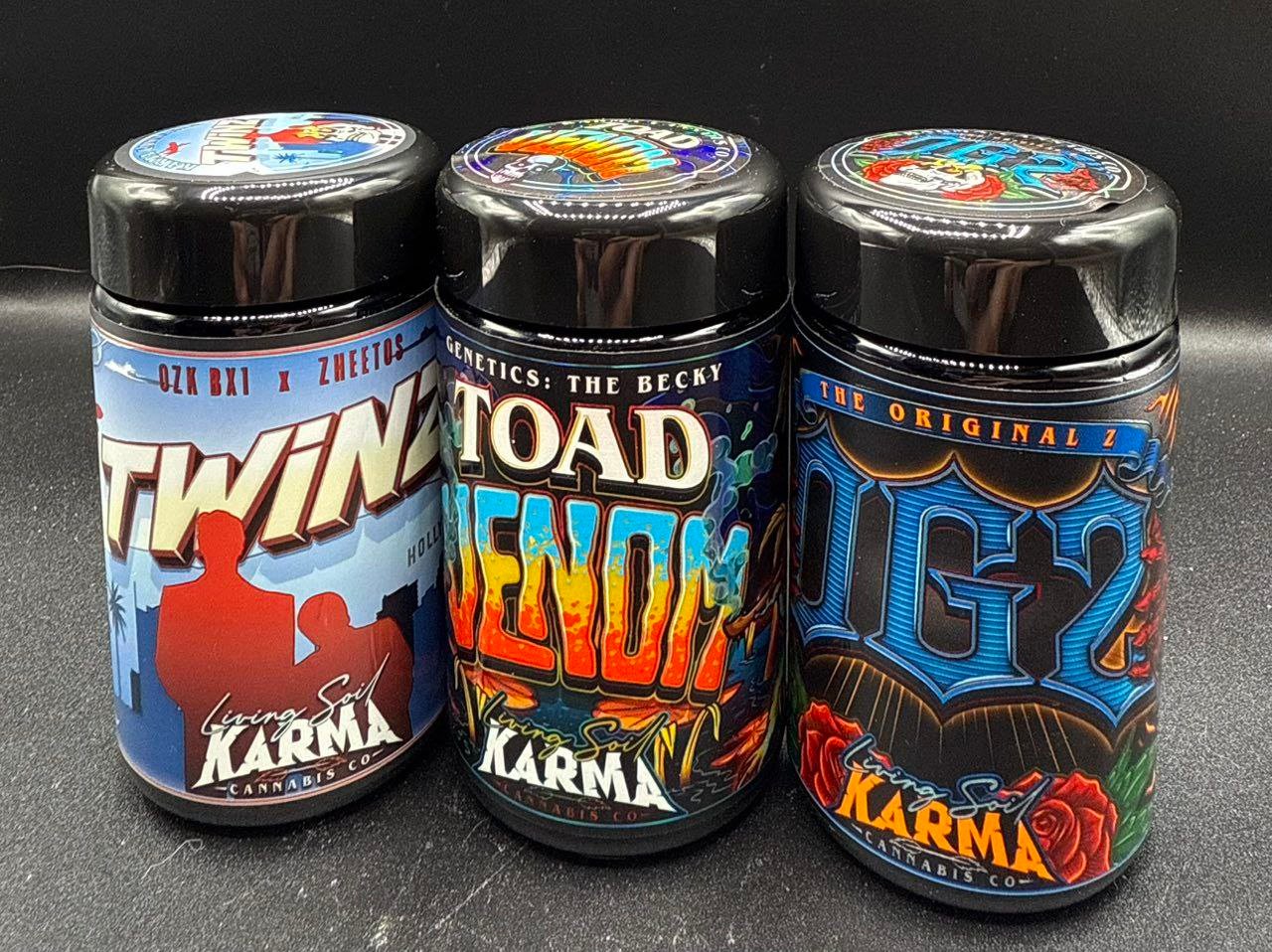
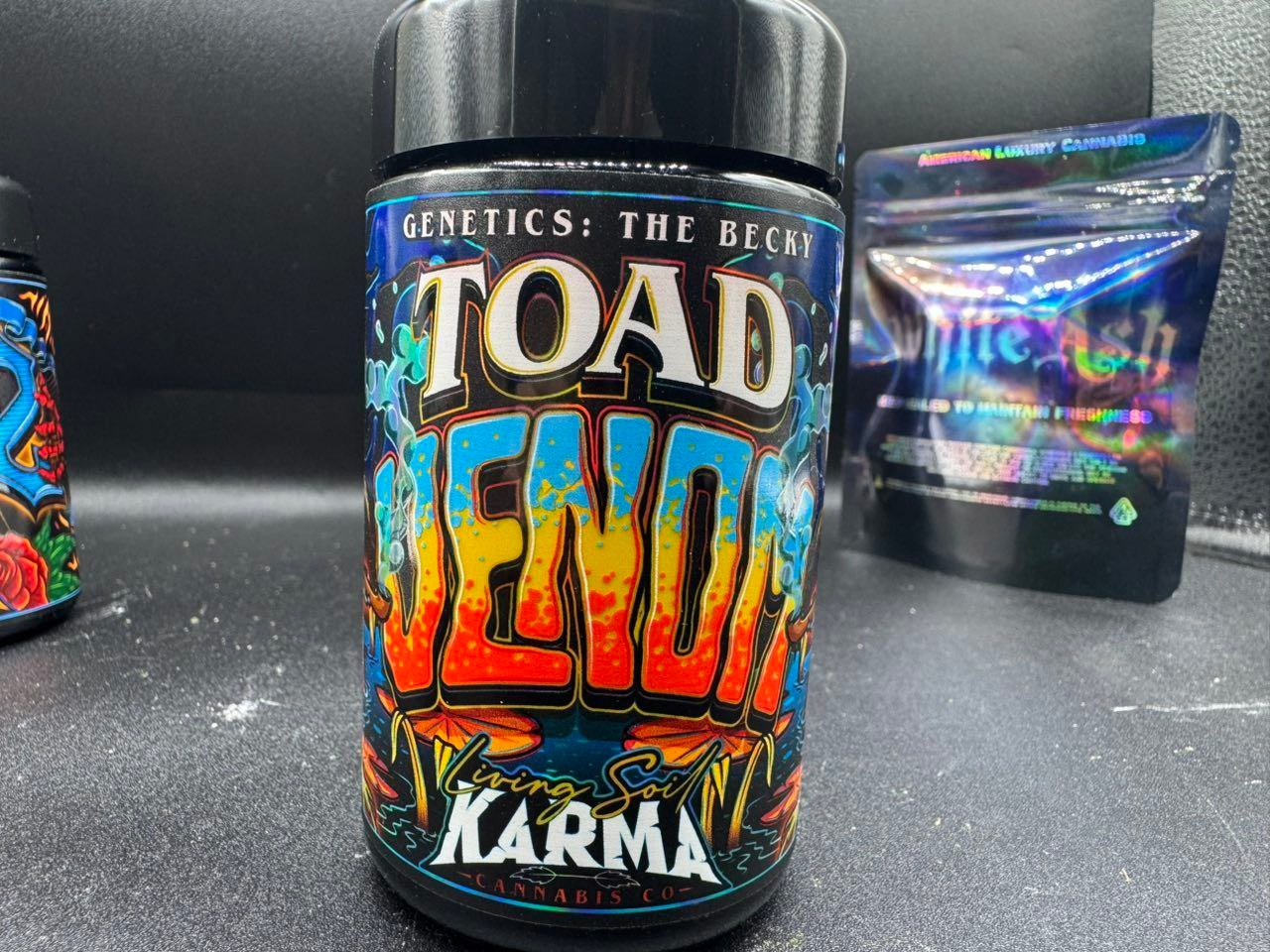
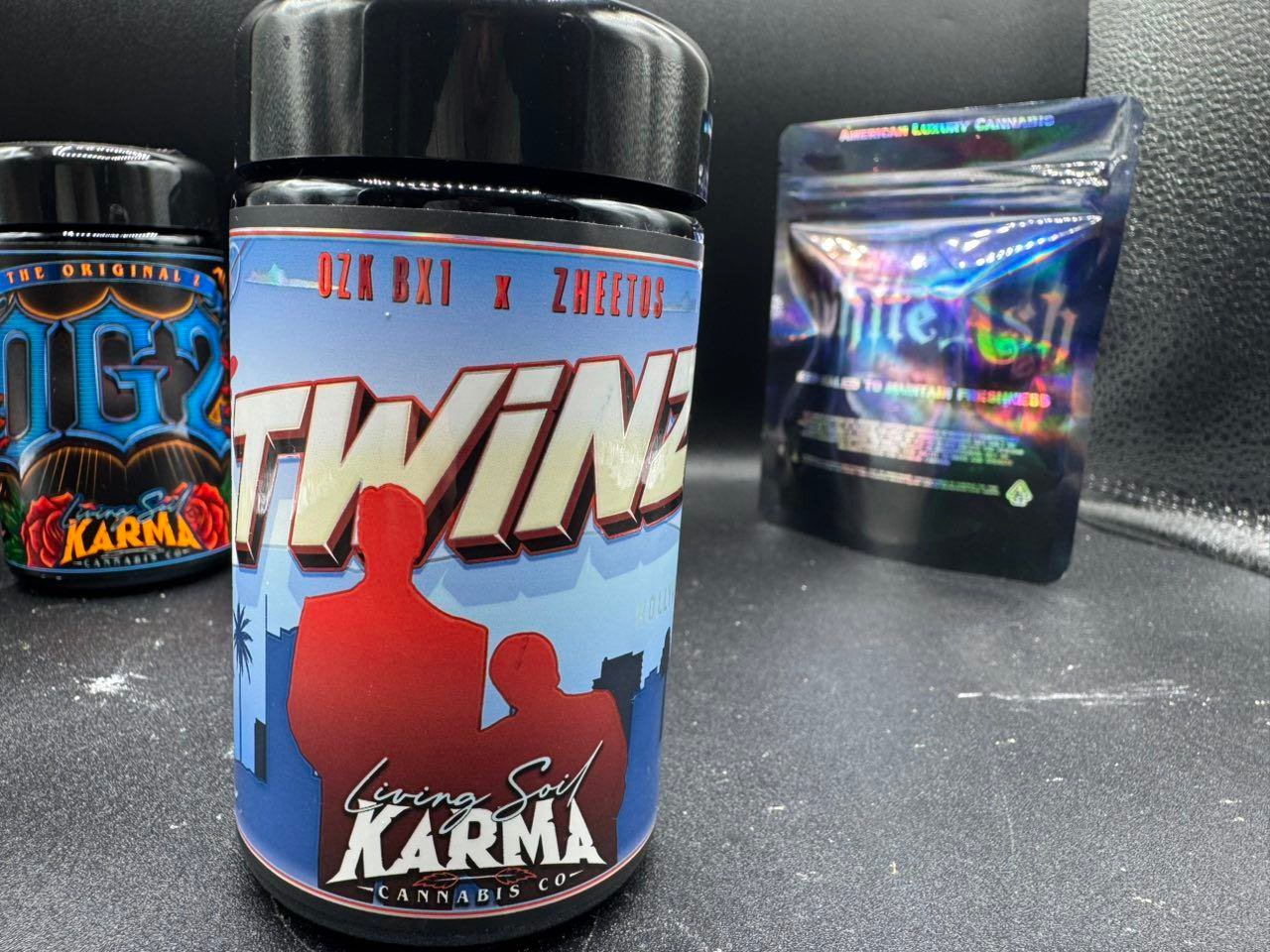
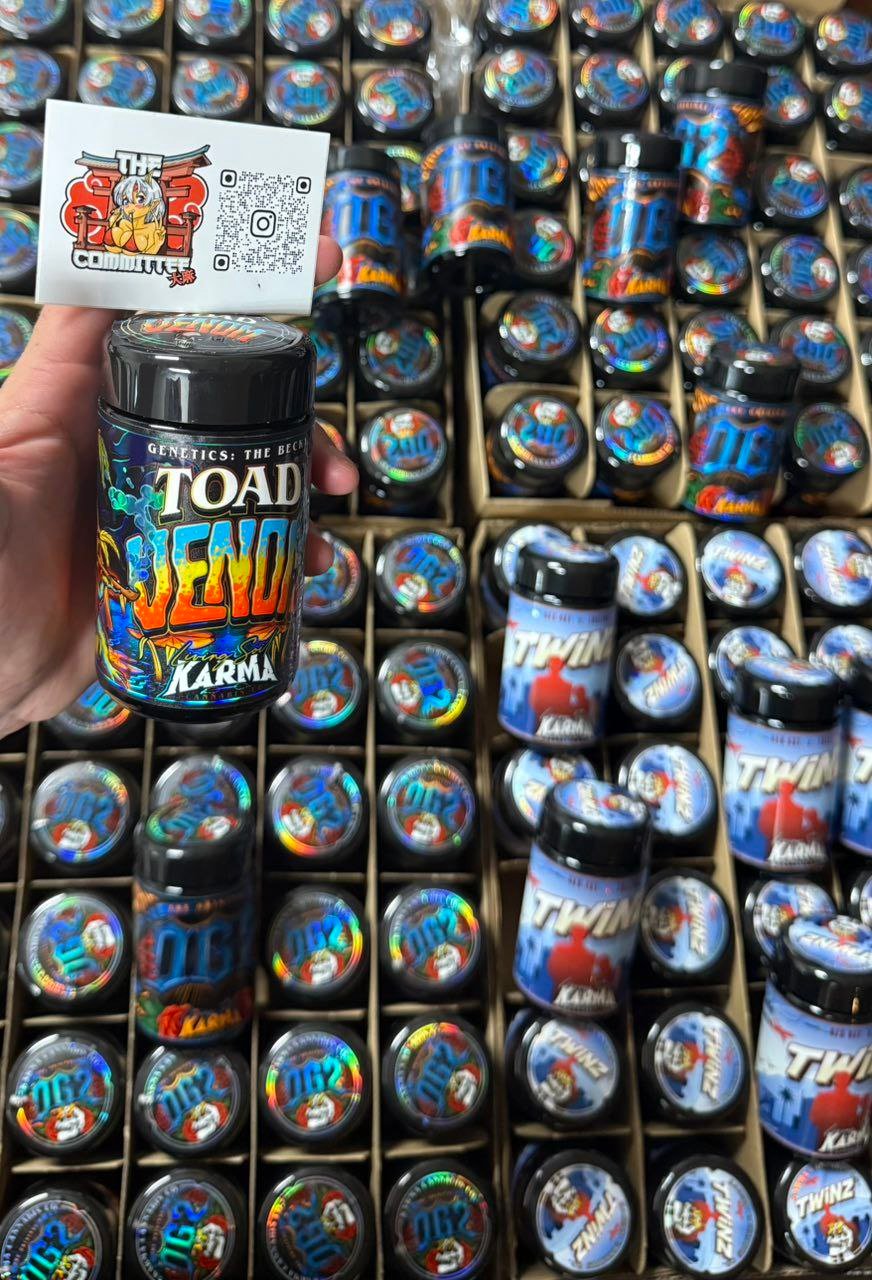



Heavy Hitting Line Up of Toad Venom and Zkittlez Crosses
The Heavy Hitting Line Up of Toad Venom and Zkittlez Crosses brings together a modern cannabis-genetics theme built around bold aroma, dense resin expression, candy-influenced flavor characteristics, gas-forward complexity, and contemporary hybrid breeding. Toad Venom and Zkittlez occupy different but connected positions in modern cannabis genetics, making this type of lineup especially interesting for consumers researching how dessert, candy, kush, mint, fruit, and fuel characteristics can overlap within newer hybrid families. Rather than representing one standardized strain, the phrase describes a collection or breeding direction in which Toad Venom genetics, Zkittlez-associated genetics, or hybrids influenced by both families may appear.
Toad Venom has developed considerable attention within contemporary cannabis culture because of its unusual combination of sweet, minty, dough-like, earthy, kush, and fuel characteristics. The cultivar is most commonly documented as Animal Face × Sin Mintz, while Sin Mintz traces through Sin Mint Cookies × Zkittlez. This means Zkittlez influence already exists within the commonly reported Toad Venom family tree, even before breeders make additional direct crosses back to Zkittlez or other candy-oriented varieties.
That genetic connection helps explain why a Toad Venom and Zkittlez lineup can display such a broad spectrum of aromas. Some expressions may emphasize candy sweetness, tropical fruit, citrus, berries, or creamy dessert notes. Others can move toward gas, earth, kush, mint, dough, spice, and more pungent characteristics. A cross does not guarantee a specific aroma, appearance, cannabinoid percentage, or effect, however. Every phenotype can express inherited traits differently, and cultivation, harvesting, drying, curing, storage, and selection all influence the finished flower.
For adults researching modern cannabis genetics where lawful, the Heavy Hitting Line Up of Toad Venom and Zkittlez Crosses is therefore best understood as a flavor- and genetics-focused collection, not simply a claim about maximum potency. The strongest way to compare individual varieties is through verified lineage information, flower quality, terpene analysis, cannabinoid testing, harvest data, and batch-specific laboratory documentation.
What Is the Heavy Hitting Line Up of Toad Venom and Zkittlez Crosses?
The Heavy Hitting Line Up of Toad Venom and Zkittlez Crosses refers to a selection of modern hybrid cannabis varieties built around genetics associated with Toad Venom, Zkittlez, or descendants of those families. “Heavy hitting” is commonly used as descriptive marketing language for cannabis varieties presented as particularly pronounced in aroma, resin production, cannabinoid concentration, or overall character. It should not be interpreted as a standardized scientific potency category.
The collection concept works because Toad Venom and Zkittlez bring contrasting yet complementary characteristics to a breeding program. Zkittlez became widely recognized for a fruit-candy style profile, while Toad Venom is commonly associated with a more complex combination of candy, mint, dough, earth, kush, chemical sharpness, and fuel.
When those genetic directions are combined, breeders can search through offspring for plants that emphasize different characteristics. One phenotype may strongly express fruit and sweetness. Another may carry the heavier gas and kush character associated with Toad Venom’s Animal Face side. Others may sit between the two, combining sweet fruit at the beginning of the aroma with mint, dough, spice, or fuel underneath.
This diversity is one of the central reasons cannabis breeders create crosses. A cross does not merely blend two flavors in equal proportions. Instead, it creates a population of genetically related plants from which distinct phenotypes can emerge.
Toad Venom Strain Genetics Explained
Toad Venom is commonly described as a hybrid created from Animal Face × Sin Mintz. Contemporary sources associate the cultivar with Ronin Seeds and a keeper phenotype often referred to as the Green Dragon or “Becky” selection. Weedmaps describes the cultivar as combining Animal Face and Sin Mintz, while genetics databases also trace Sin Mintz back to Sin Mint Cookies and Zkittlez.
Animal Face contributes an important part of the lineage. It belongs to a family associated with OG, kush, gas, earth, and resin-forward characteristics. Sin Mintz introduces another layer of mint-cookie and sweet traits, while its Zkittlez ancestry provides a connection to fruit and candy-oriented genetics.
The result is a cultivar whose identity is considerably more complex than a single flavor category.
Depending on the phenotype and cultivation, Toad Venom has been described using terms such as:
mint, fuel, creamy dough, candy, citrus, earthy spice, kush, sour notes, chemical funk, and sweet undertones.
Leafly currently characterizes Toad Venom as a hybrid and reports consumer descriptions ranging from chemical and cheese-like notes to more uplifting or relaxed experiences. Consumer-reported effects should be regarded as subjective rather than guarantees because individual response varies substantially.
The Zkittlez Connection Inside Toad Venom
One of the most interesting aspects of a Toad Venom and Zkittlez cross lineup is that the relationship between the two families does not necessarily begin with a new direct cross.
Under the commonly documented genealogy:
Toad Venom = Animal Face × Sin Mintz
and
Sin Mintz = Sin Mint Cookies × Zkittlez.
That places Zkittlez farther back inside the Toad Venom family tree.
Consequently, breeders working with Toad Venom may already be working with plants capable of expressing some sweet, candy-oriented, fruit-influenced characteristics. Crossing a Toad Venom selection with another Zkittlez-dominant plant can potentially reinforce parts of that genetic direction, although the resulting offspring still need to be evaluated individually.
This distinction matters for accurate strain descriptions. It is better to describe a variety as having Zkittlez ancestry or influence unless the breeder specifically documents Zkittlez as a direct parent.
Genetics information should therefore accompany any named strain within the lineup whenever possible.
Zkittlez Genetics and Flavor Influence
Zkittlez became notable within modern cannabis breeding largely because of its recognizable candy-fruit reputation. Its name itself evokes a mixture of colorful fruit candies, and many descendants have been selected for similarly sweet aromatic traits.
Across Zkittlez-influenced hybrids, consumers may encounter descriptions involving tropical fruit, berries, citrus, grape, sweet candy, cream, earth, herbs, or floral accents.
However, genetics do not work like artificial flavor recipes. Crossing a plant with Zkittlez does not guarantee that every offspring will smell identical to fruit candy.
One phenotype might lean toward fruit.
Another might carry much more earth or gas.
A third could combine candy characteristics with mint, kush, dough, floral notes, or spice.
When Zkittlez genetics interact with the more aggressive aromatic character associated with Toad Venom, the potential spectrum becomes especially broad.
This is why a well-selected Toad Venom × Zkittlez cross can be more interesting than simply creating an extremely sweet flower. Breeders can look for combinations where fruit and candy notes sit alongside fuel, mint, kush, earth, or dough, creating a layered profile rather than a one-dimensional aroma.
Toad Venom and Zkittlez Cross Flavor Profile
The expected flavor direction of the Heavy Hitting Line Up of Toad Venom and Zkittlez Crosses is one of its defining characteristics.
At the sweeter end of the spectrum, individual plants may present aromas reminiscent of mixed fruit, berries, citrus candy, tropical fruit, grape, creamy sweets, or sugary desserts.
Moving deeper into the aroma can reveal more complex characteristics. Mint, dough, earthy kush, herbs, pepper, sour citrus, fuel, or chemically sharp notes may emerge depending on the genetics expressed by an individual phenotype.
A well-developed flower can therefore have several aromatic stages.
The initial jar aroma might appear sweet.
Breaking the flower apart may expose sharper gas or citrus.
Closer examination may reveal creamy dough, mint, earth, or spice underneath.
The aromatic experience can also change during storage because volatile compounds are sensitive to heat, oxygen, light, humidity, and time.
For this reason, flavor descriptions are most useful when presented as expected or observed characteristics rather than promises.
Candy and Gas Cannabis Genetics
Modern cannabis breeding has increasingly explored the combination of candy and gas genetics.
Candy-oriented lines can contribute fruit, sweetness, berry, citrus, cream, and dessert-inspired aromas. Gas-oriented families commonly contribute sharper fuel, chemical, kush, earthy, pine, or diesel characteristics.
Toad Venom and Zkittlez-related genetics fit naturally into this trend.
Zkittlez supplies the recognizable candy association, while Toad Venom introduces heavier aromatic dimensions through Animal Face, Sin Mintz, and the broader families behind those parents.
This balance may appeal to consumers who find extremely sweet varieties too simple but also do not want a purely fuel-dominant profile.
Instead, the breeding objective can become complexity.
Sweetness can introduce the aroma.
Gas can create contrast.
Mint and dough can connect the two.
Earth and kush can provide depth.
Citrus can add brightness.
A carefully selected phenotype may express several of these qualities simultaneously.
Toad Venom Crosses: Understanding Phenotype Variation
Every cannabis cross creates genetic possibilities rather than a single predetermined result.
Imagine a breeder creating seeds from Toad Venom and a Zkittlez-influenced parent. Even when every seed shares the same named parents, the resulting plants may differ considerably.
One plant could have darker foliage and compact buds.
Another could stretch significantly more.
One might smell primarily of tropical candy.
Another could smell overwhelmingly of gas and mint.
A third might combine grape-like sweetness with dough and earth.
These individual expressions are called phenotypes.
Breeders often germinate numerous seeds and evaluate the resulting plants to find selections exhibiting desirable combinations of structure, resin, aroma, maturation time, flower appearance, and chemical composition.
A keeper phenotype can then be preserved through cloning.
This process explains why two products carrying related genetics can still look and smell different.
The breeder, selection, cultivation environment, and authenticity of the plant material matter just as much as the strain name.
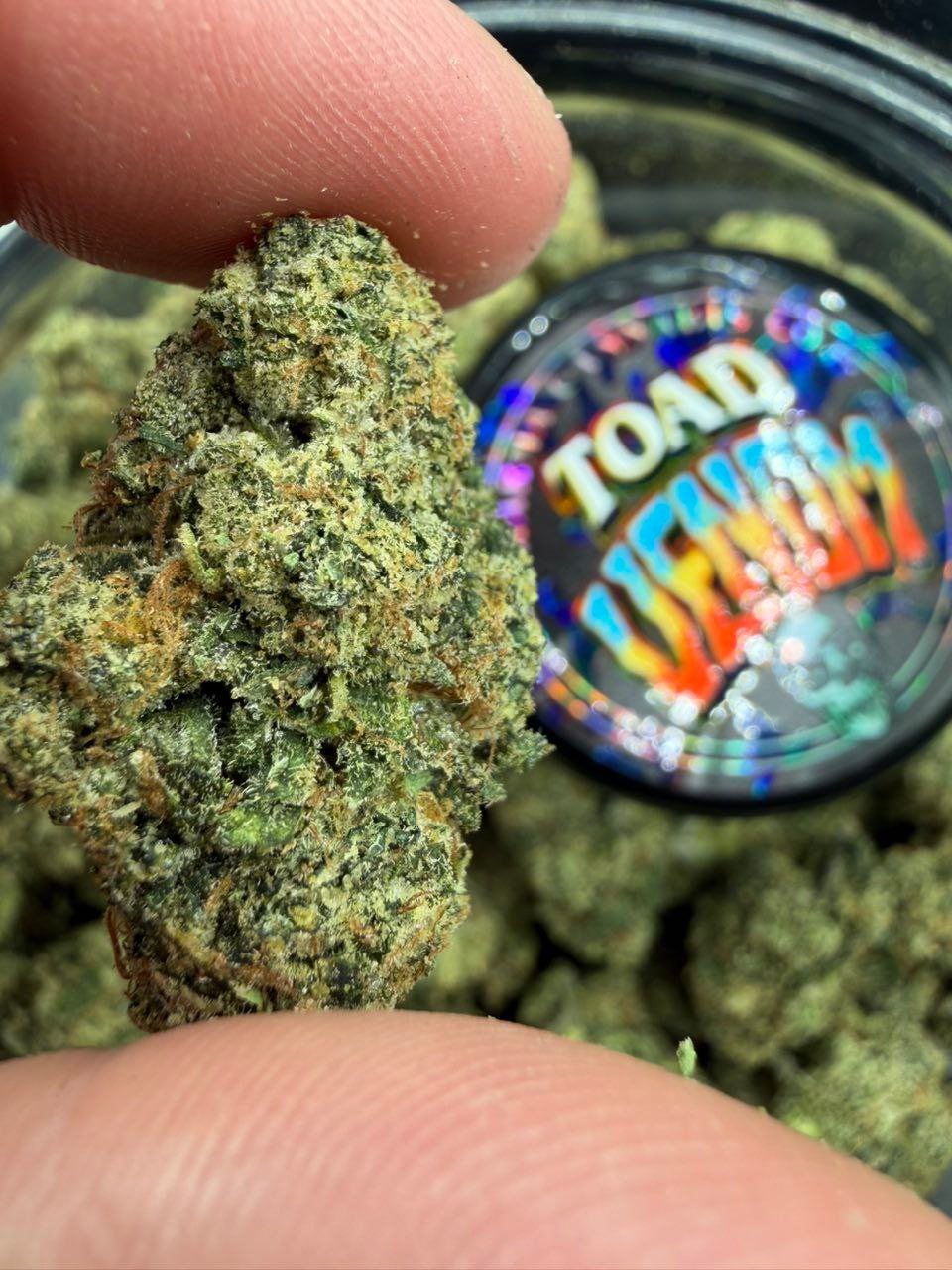
Heavy Hitting Toad Venom Flower Appearance
The visual appearance of Toad Venom-influenced flower can vary, although heavily resinous presentation is frequently associated with the cultivar in contemporary descriptions.
Buds may display multiple green shades, orange or amber pistils, and a dense surface of glandular trichomes. Some phenotypes can develop darker tones depending on genetics and cultivation conditions.
The word “frosty” is commonly used to describe flower with abundant visible trichomes.
Trichomes are microscopic resin-producing structures on cannabis flowers. They contain cannabinoids, terpenes, and numerous other compounds.
However, visible frost should never be treated as an exact measure of cannabinoid strength.
A highly photogenic flower may test differently from expectations, while another less dramatic-looking batch can have a completely different cannabinoid and terpene profile.
Appearance is therefore one quality indicator, not a substitute for analysis.
Toad Venom and Zkittlez Crosses Aroma
Aroma may be the most interesting area for comparing varieties within this lineup.
The Toad Venom side can introduce characteristics commonly described as mint, creamy fuel, baked dough, earth, kush, citrus, spice, and funk. Weedmaps describes the cultivar’s aromatic development as combining mint-cookie sweetness with creamy fuel, baked dough, earth, and kush-oriented characteristics.
Zkittlez influence can shift the profile toward fruit and candy.
Together, potential aromatic descriptions might include:
sweet fruit and gas,
candy and mint,
berry and dough,
tropical fruit and kush,
citrus candy and fuel,
grape sweetness and earth,
or creamy dessert notes followed by spice.
The actual composition depends on the phenotype and batch.
Consumers researching aroma should look for terpene results where available instead of assuming that every cultivar with the same parentage will have an identical smell.
Terpenes in Toad Venom Crosses
Terpenes are aromatic compounds found throughout nature, including cannabis. They contribute significantly to the smell of individual flower varieties.
Some contemporary descriptions of Toad Venom report terpenes such as caryophyllene, limonene, myrcene, and other aromatic compounds, although the exact terpene composition can vary by sample.
Caryophyllene is commonly associated with peppery, spicy, woody characteristics.
Limonene is frequently associated with citrus aromas.
Myrcene can contribute earthy, herbal, or musky characteristics.
Different compounds interacting together can create far more complex aromas than any single terpene description suggests.
A flower that smells like candy, gas, dough, and citrus simultaneously is unlikely to owe its complete character to only one molecule.
Laboratory terpene testing can therefore add useful information when comparing individual Toad Venom and Zkittlez crosses.
Resin Production and Modern Toad Venom Genetics
Resin expression has played an important role in the attention surrounding Toad Venom.
Contemporary descriptions frequently emphasize its trichome development and its use in concentrate-oriented selections. Weedmaps notes that resin production and hash performance helped contribute to the cultivar’s reputation.
For flower consumers, visible resin can influence appearance and aroma.
For breeders, resin production can become a selection characteristic alongside yield, structure, terpene expression, and overall plant performance.
However, resin quantity should not automatically be equated with finished-product quality.
Cultivation cleanliness, proper drying, curing, contaminant testing, moisture management, freshness, and storage all remain important.
A heavily frosted flower that has been stored poorly can lose much of the aromatic character that made the genetics interesting in the first place.
Toad Venom and Zkittlez Cross Potency
People searching for a Heavy Hitting Line Up of Toad Venom and Zkittlez Crosses are often interested in potency.
The most important point is that no accurate potency percentage can be assigned to an entire genetic family.
Cannabinoid content can vary between phenotypes, cultivation environments, harvests, individual plants, and laboratories.
Even flower sold under the same strain name can test differently between batches.
Consequently, statements such as “30% THC,” “extremely potent,” or “strongest available” should only be used when corresponding batch-specific testing supports them.
For an individual product, look at the certificate of analysis.
A typical cannabinoid panel may identify THCA, delta-9 THC, CBGA, CBG, CBDA, CBD, and other measurable compounds.
The laboratory report should correspond to the actual batch being described.
Toad Venom Effects and Consumer Expectations
Cannabis effects cannot be predicted reliably from a strain name alone.
Some current Toad Venom listings and consumer databases describe uplifting, focused, relaxing, euphoric, or energetic experiences. Leafly’s consumer reports, for example, contain several different effect descriptions, demonstrating how individual experiences can vary.
Several factors influence response, including cannabinoid composition, serving amount, individual tolerance, prior cannabis exposure, physiology, consumption method, and environment.
This is why informational product content should avoid guaranteeing that a strain will make every consumer feel creative, sleepy, energized, relaxed, hungry, or euphoric.
A more accurate description is that Toad Venom and Zkittlez crosses can have cannabinoid and terpene profiles that differ considerably across phenotypes and batches.
Adults choosing cannabis where lawful should therefore use product-specific testing rather than effect-based marketing alone.
Toad Venom vs Zkittlez
Comparing Toad Venom vs Zkittlez illustrates why combining the two genetic directions can produce interesting hybrids.
Toad Venom generally carries a more complex gas, mint, dough, earth, kush, and candy reputation.
Zkittlez is more strongly associated with fruit-candy sweetness.
Toad Venom already carries Zkittlez ancestry through Sin Mintz under the commonly documented lineage.
Therefore, a direct comparison should not treat them as completely unrelated genetic worlds.
Instead, Toad Venom can be viewed as one modern example of how Zkittlez ancestry has already been incorporated into more complex hybrid families.
Additional crosses can push certain inherited traits forward again, producing offspring where breeders may select for stronger fruit, increased gas, different bud structure, greater resin expression, or other desired characteristics.
Toad Venom × Zkittlez Crosses and Modern Exotic Flower
The word exotic is commonly used in cannabis marketing, although it has no universal scientific definition.
In contemporary flower culture, people often use the term to describe varieties with unusual genetics, dramatic bag appeal, distinctive aromas, limited availability, or newer breeding combinations.
A Toad Venom and Zkittlez cross can fit this modern “exotic flower” concept because both genetic families are associated with the contemporary market’s focus on aroma and phenotype selection.
However, a strain should not be considered high quality merely because someone labels it exotic.
Actual quality requires more meaningful evaluation.
The flower should be properly cultivated.
It should be harvested at an appropriate stage.
Drying and curing should preserve rather than destroy aroma.
The material should be stored correctly.
And where testing is required or represented, the laboratory documentation should correspond to the product.
Indoor Toad Venom and Zkittlez Crosses
Indoor cultivation gives growers extensive environmental control.
Lighting schedules, temperature, humidity, airflow, irrigation, substrate, nutrition, and other variables can be managed throughout the crop cycle.
This does not automatically make indoor flower superior to greenhouse or outdoor flower, but controlled environments can help cultivators pursue repeatable conditions.
For resin-rich genetics such as Toad Venom-related hybrids, environmental management can be especially important because flower structure and aromatic quality can be affected by heat, humidity, plant stress, harvest timing, and post-harvest treatment.
The cultivation label alone does not determine quality.
Well-grown greenhouse or outdoor flower can exhibit excellent characteristics, just as poorly handled indoor flower can disappoint.
Consumers should evaluate the finished batch rather than relying solely on the word “indoor.”
Premium Flower Structure and Bag Appeal
Bag appeal describes the immediate visual impression made by cannabis flower.
Modern Toad Venom and Zkittlez crosses may be selected for dense flower structure, noticeable trichome coverage, contrasting pistils, colorful plant material, and a carefully trimmed presentation.
Yet some of the most important flower characteristics cannot be seen in a photograph.
A picture cannot verify aroma.
It cannot determine cannabinoid concentration.
It cannot verify pesticide testing.
It cannot confirm genetics.
It cannot establish freshness.
For this reason, attractive photography should accompany—not replace—meaningful product information.
A professionally documented strain page should clearly distinguish between visual characteristics and verified analytical data.
How to Evaluate a Toad Venom and Zkittlez Cross
Consumers researching a specific strain from this lineup should begin with genetics.
Who bred it?
What are the documented parents?
Is it a direct Toad Venom cross or simply a descendant?
Does it contain direct Zkittlez genetics, or does the Zkittlez influence come through Sin Mintz?
Next, examine the batch information.
A useful product label may include a harvest or package date, cannabinoid results, batch number, net weight, producer information, and laboratory reference.
The flower itself can then be evaluated for aroma, moisture condition, structure, trichomes, trim quality, and freshness.
This approach provides considerably more useful information than simply asking whether one strain “hits harder” than another.
Toad Venom Authenticity and Genetic Verification
Authenticity has become increasingly important as highly discussed strain names become popular.
Once a cultivar develops a strong reputation, unrelated flower may occasionally be sold under the same name.
Toad Venom is particularly relevant because contemporary discussions often reference a specific keeper phenotype associated with the original selection.
For consumers, absolute genetic verification is difficult without supply-chain transparency.
Packaging alone does not prove lineage.
A strain name printed on a bag does not establish that the plant came from an authentic clone.
Better indicators include breeder documentation, reputable cultivation sources, consistent provenance, batch tracking, and transparent producer information.
This issue also applies to crosses.
A product described as Toad Venom × Zkittlez should ideally identify the breeder and exact parents rather than simply using two popular strain names for marketing.
Lab Testing Toad Venom and Zkittlez Crosses
Laboratory testing helps separate measurable characteristics from descriptive language.
A complete test may contain several sections depending on jurisdiction.
Cannabinoid analysis can show THCA, THC, CBD, CBDA, CBG, CBGA, and other detected cannabinoids.
Terpene testing can provide insight into aromatic composition.
Compliance testing may also cover pesticides, microorganisms, heavy metals, mycotoxins, foreign material, water activity, or additional categories required by local rules.
A certificate of analysis should ideally include a batch identifier connecting the report with the packaged product.
Consumers should be cautious about potency percentages appearing on promotional images without corresponding batch information.
How to Store Toad Venom and Zkittlez Flower
Storage can significantly influence cannabis quality over time.
Light, oxygen, heat, excessive dryness, and excess moisture can alter flower condition and aroma.
Flower is generally better protected when kept in a properly sealed container away from direct sunlight and excessive temperature changes.
The original labeled container can also help preserve important batch and compliance information.
Products should be stored securely away from children and pets.
Repeatedly opening a container can introduce fresh air and gradually release volatile aromatic compounds.
For collectors comparing several modern strains, careful storage makes it easier to preserve the characteristics that differentiate one phenotype from another.
Heavy Hitting Line Up Flavor Diversity
One of the strongest characteristics of this lineup concept is diversity.
A Toad Venom-dominant selection may lean toward mint, dough, kush, gas, and earth.
A Zkittlez-dominant selection may emphasize sweet fruit and candy.
A balanced phenotype could produce a layered combination of both.
Additional parents can expand the range even further.
Breeders might introduce citrus genetics for sharper brightness, dessert lines for creamier characteristics, OG-related genetics for additional gas, or berry families for darker fruit aromas.
This creates a collection where related genetics can remain recognizable without every strain tasting the same.
For strain enthusiasts, this makes genetic comparison part of the appeal.
Why Toad Venom Genetics Have Attracted Attention
Toad Venom has become one of the more discussed modern cultivars because it occupies an interesting intersection between familiar cannabis families and a distinctive modern phenotype.
Its lineage brings together Animal Face and Sin Mintz, while the Sin Mintz side incorporates Zkittlez ancestry.
That family tree connects several trends that have shaped contemporary cannabis breeding: OG and kush influence, mint-cookie genetics, candy terpenes, resin selection, and visually impressive flower.
The cultivar’s growing recognition has naturally encouraged breeders to explore it in new combinations.
Some crosses may attempt to retain the recognizable Toad Venom character.
Others may use it primarily as a source of resin, structure, aroma, or other inherited characteristics.
This is why documenting the actual cross remains essential.
Heavy Hitting Line Up of Toad Venom and Zkittlez Crosses FAQ
What is Toad Venom?
Toad Venom is a modern hybrid cannabis cultivar most commonly documented as Animal Face × Sin Mintz. It is associated with a complex aroma that can include mint, dough, fuel, earth, candy, citrus, kush, and spice.
Does Toad Venom contain Zkittlez genetics?
Under the commonly reported family tree, yes. Sin Mintz—the parent used in Toad Venom—is documented as descending from Sin Mint Cookies × Zkittlez.
What does a Toad Venom and Zkittlez cross taste like?
There is no single guaranteed flavor. Depending on phenotype and cultivation, the profile can potentially include fruit candy, berries, citrus, mint, creamy dough, gas, earth, kush, herbs, or spice.
Is Toad Venom a hybrid?
Yes. Contemporary strain databases generally describe Toad Venom as a hybrid cultivar.
Are all Toad Venom crosses the same?
No. Different parent combinations and phenotypes can create substantially different flower structures, aromas, cannabinoid profiles, growth characteristics, and resin expression.
Are Toad Venom and Zkittlez crosses high in THC?
They may be marketed as potent varieties, but genetics alone cannot establish the THC level of a particular product. Batch-specific laboratory analysis is required for an accurate percentage.
What are the main Toad Venom aromas?
Common descriptions include mint, fuel, dough, earth, kush, candy, citrus, and spice. Individual batches can vary.
Why is Zkittlez used in cannabis breeding?
Zkittlez became widely recognized for fruit- and candy-associated characteristics, making its genetics relevant to breeders interested in sweet aromatic expressions.
What makes a Toad Venom cross exotic?
“Exotic” is a marketing and cultural term rather than a scientific quality grade. Toad Venom crosses may be described this way because of newer genetics, distinctive aromas, resin development, visual presentation, or limited selections.
How can you verify Toad Venom genetics?
Look for breeder information, documented parentage, reputable provenance, transparent cultivation sources, and clear strain records. Packaging or a strain name alone cannot conclusively verify genetics.
What should consumers check before evaluating a strain?
Useful information includes the batch number, harvest or packaging date, laboratory results, cannabinoid profile, terpene information where available, producer identity, genetic lineage, and product condition.
Heavy Hitting Line Up of Toad Venom and Zkittlez Crosses: Final Overview
The Heavy Hitting Line Up of Toad Venom and Zkittlez Crosses represents a compelling direction within modern cannabis genetics because it brings together several of the characteristics that have shaped contemporary flower breeding: candy sweetness, fruit, gas, mint, dough, kush, resin, and visually striking flower.
The genetic relationship is particularly important. Toad Venom is most commonly identified as Animal Face × Sin Mintz, while Sin Mintz carries Zkittlez ancestry. This means the candy-oriented influence associated with Zkittlez already runs through the commonly accepted Toad Venom lineage. Additional direct crosses can potentially reinforce, redirect, or combine those inherited traits in new ways.
That does not mean every Toad Venom or Zkittlez cross will look, smell, or test the same. Cannabis breeding creates variation. Each seed can produce a different phenotype, and cultivators then select plants according to the characteristics they consider most desirable.
Some selections may place fruit and candy at the center of the experience.
Others may be dominated by gas, kush, mint, earth, or creamy dough.
Some can bridge both directions, creating the kind of sweet-versus-pungent contrast that has become especially recognizable within modern hybrid flower.
For consumers researching this lineup, the best approach is to look beyond hype-oriented terminology. Genetics, phenotype selection, terpene expression, flower condition, batch-specific cannabinoid analysis, authenticity, cultivation quality, and laboratory transparency offer considerably more information than an unsupported potency claim.
Ultimately, the Heavy Hitting Line Up of Toad Venom and Zkittlez Crosses is best understood as a modern genetics collection centered around complexity. Toad Venom provides a distinctive foundation of Animal Face, Sin Mintz, gas, mint, dough, kush, and resin-oriented characteristics, while Zkittlez-associated genetics reinforce the fruit-and-candy side of the family. The interaction between those characteristics gives breeders considerable room to develop individual selections with different aromas, structures, colors, cannabinoid profiles, and terpene expressions.
That diversity is what makes the lineage worth studying. Rather than one standardized flavor or effect, Toad Venom and Zkittlez crosses represent a broad genetic spectrum where candy can meet gas, fruit can meet kush, sweetness can meet mint, and modern dessert genetics can intersect with more pungent OG-influenced characteristics.
For an accurate product page, each specific strain within the lineup should ultimately be accompanied by its documented genetics, batch-specific test results, terpene profile where available, harvest information, and clear producer identification. Those details provide the transparency needed to distinguish a genuine genetic collection from a strain name used only for marketing.