Dee Solventless Rosin Gummies (100mg): Complete Guide to Flavors, Cannabinoids, Verification and Storage
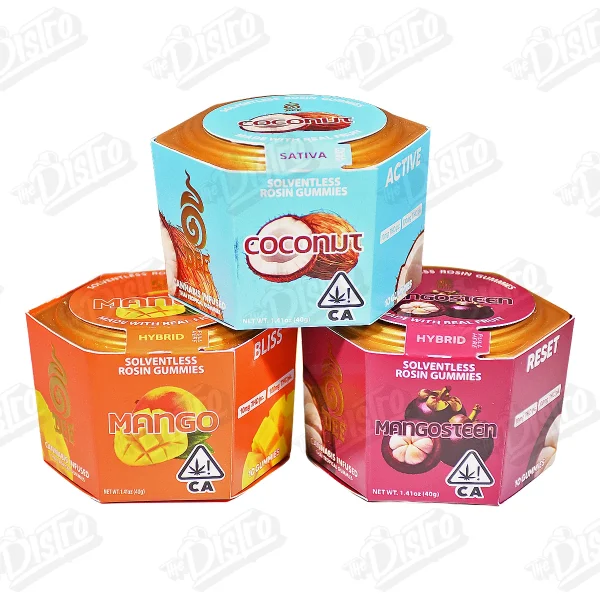
Dee Solventless Rosin Gummies (100mg), sold under the Dee Thai brand, are cannabis-infused fruit gummies built around solventless hash rosin, tropical flavor profiles, and carefully differentiated cannabinoid formulations. The official Dee Thai range currently includes products such as Bliss Mango, Active Coconut, Reset Mangosteen, Energy Pineapple, Restore Papaya, Dreamy Dee Lavender Berry, and Refresh Guava. Most are presented as ten-piece packages containing 10mg THC per gummy, giving the package a total of 100mg THC, while selected varieties add cannabinoids such as CBD, CBG, CBN, or THCV.
Consumers searching for Dee Solventless Rosin Gummies 100mg, Dee Thai Gummies, Dee Rosin Gummies, Dee Thai 100mg Gummies, solventless hash rosin edibles, Dee Thai gummy flavors, Dee Thai authenticity, and Dee Gummies verification are often interested in what separates these products from ordinary distillate gummies. The key distinction is the cannabis extract. Dee Thai states that its gummy line uses live rosin and describes its solventless hash as being extracted with water, heat, and pressure rather than conventional hydrocarbon solvents. The brand also states that its cannabis ingredients are ground, washed, and pressed in-house.
The official product line also uses pectin rather than a conventional gelatin-centered formulation. Dee Thai describes its gummies as plant-based, vegan, gluten-free, and fat-free. The collection is heavily influenced by tropical Thai fruit flavors, which gives the range an identity distinct from many cannabis edibles based mainly on conventional cherry, blue raspberry, or generic sour-candy profiles.
For consumers comparing cannabis gummies, however, flavor and branding should not be the only considerations. Cannabinoid content, extract type, batch information, product labeling, laboratory testing, packaging condition, and storage all matter when determining whether a particular product matches its advertised specifications.
What Are Dee Solventless Rosin Gummies?
Dee Solventless Rosin Gummies are edible cannabis gummies infused with live rosin. According to Dee Thai, its solventless hash is produced using water, heat, and pressure, and the cannabis material used for its products is processed in-house.
Rosin differs from highly refined cannabis distillate because it is generally produced mechanically. Cannabis resin is separated from plant material, and heat and pressure are then used to produce the concentrated rosin extract.
The word solventless refers to the extraction approach. It does not mean the entire gummy contains no water, flavor ingredients, acids, sugars, or other food ingredients. Instead, it describes the way the cannabis concentrate itself is produced.
The official Dee Thai site lists live rosin and pectin as principal characteristics of the gummy range and states that the gummies have a net package weight of 40 grams.
This combination of live rosin, pectin, and tropical flavors places Dee Thai within the growing category of premium solventless cannabis edibles.
Dee Solventless Rosin Gummies Specifications
| Specification | Current Product Information |
|---|---|
| Brand | Dee Thai |
| Product type | Cannabis-infused gummy edible |
| Extract | Live rosin / solventless hash rosin |
| Extraction description | Water, heat, and pressure |
| Standard THC package amount | 100mg THC |
| Common piece count | 10 gummies |
| Standard THC per gummy | 10mg THC |
| Gummy base | Pectin |
| Dietary positioning | Brand describes line as vegan, gluten-free, and fat-free |
| Net weight | Brand lists 40 grams |
| Main flavors | Coconut, Mangosteen, Pineapple, Mango, Papaya, Lavender Berry, Guava |
| Additional cannabinoids | Selected products include CBD, CBG, CBN, or THCV |
| Cannabis processing | Brand states cannabis ingredients are processed in-house |
| Verification | Check batch/lot information and applicable testing documentation |
| Storage | Keep sealed in a cool, dry, secure environment |
The standard 100mg THC package size also aligns with California’s normal adult-use edible limit. California regulations provide that a conventional edible cannabis product may contain no more than 10mg THC per serving and 100mg THC per package.
Understanding the 100mg THC Format
When a Dee Thai package is labeled 100mg, that generally refers to the total THC in the package rather than 100mg in each gummy.
Current Dee products commonly use ten individual pieces containing 10mg THC each. For example, the official Bliss Mango product states that each gummy contains 10mg THC, while current retailer listings identify the package as a 100mg ten-pack.
Ten gummies multiplied by 10mg THC gives a total of 100mg THC.
Some Dee formulations also contain another cannabinoid. In those cases, the 100mg designation may refer specifically to THC rather than the combined weight of all cannabinoids.
For example, Refresh Guava contains a stated 10mg THC plus 10mg CBG in each piece. A ten-piece package therefore contains 100mg THC plus 100mg CBG.
Similarly, Restore Papaya uses a 1:1 THC ratio with 10mg THC and 10mg CBD per gummy.
This distinction is important when comparing Dee gummies because two packages may both say 100mg THC while offering very different secondary cannabinoid profiles.
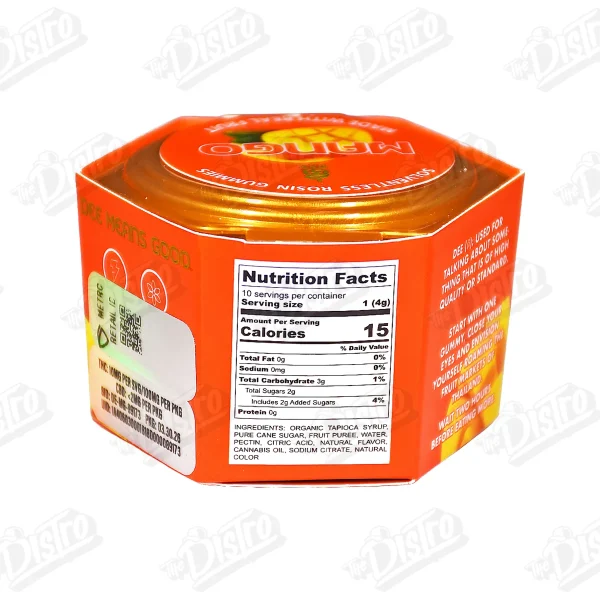
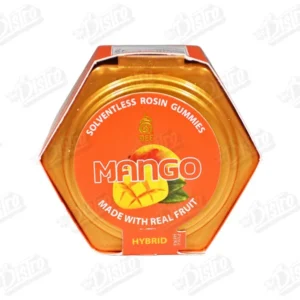
Bliss Mango Hybrid Gummies
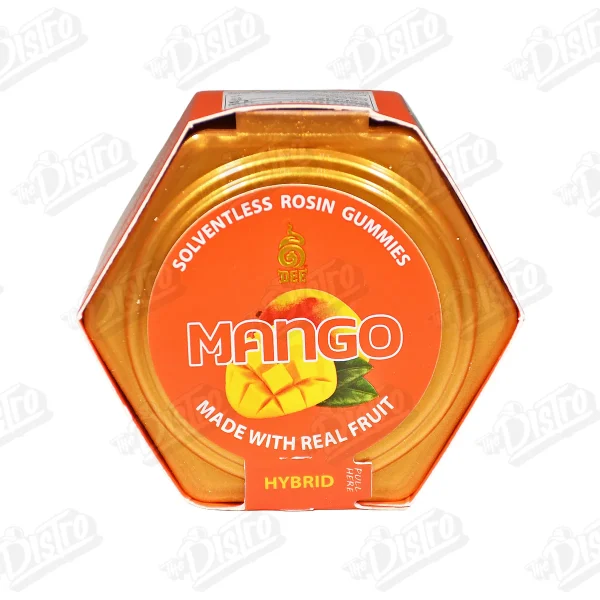
Bliss Mango is one of the core Dee Thai solventless rosin varieties.
The official product page identifies it as a Hybrid and states that each gummy contains 10mg THC infused with hybrid rosin. The flavor is based around ripe, juicy mango, fitting Dee Thai’s broader emphasis on tropical fruit.
Mango provides a naturally sweet and tropical flavor concept without relying on the sour-candy positioning commonly found in many cannabis gummies.
From an informational standpoint, Bliss Mango is one of the simplest formulations in the current line because its main cannabinoid emphasis is THC rather than a multi-cannabinoid ratio.
Consumers should avoid interpreting the Hybrid designation as a guarantee of a particular psychological or physical effect. Individual responses to cannabis edibles vary, and product descriptions such as relaxing or uplifting are partly subjective marketing language.
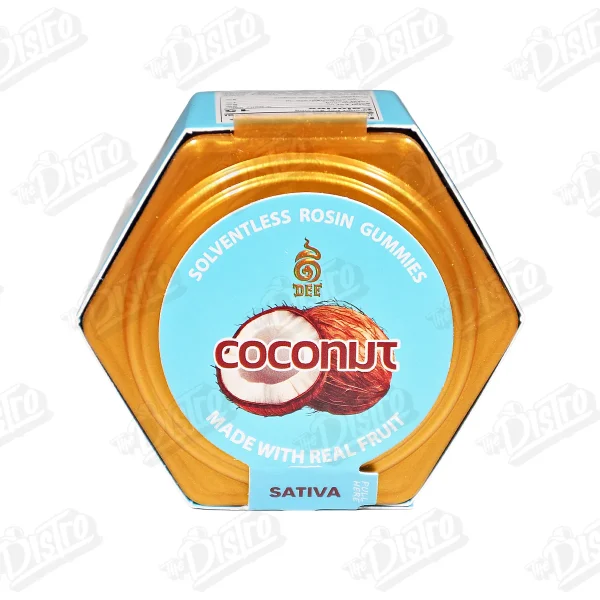
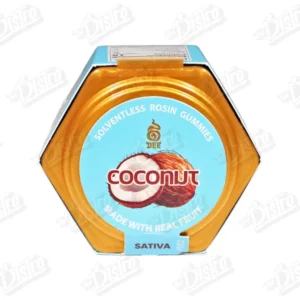
Active Coconut Sativa Gummies
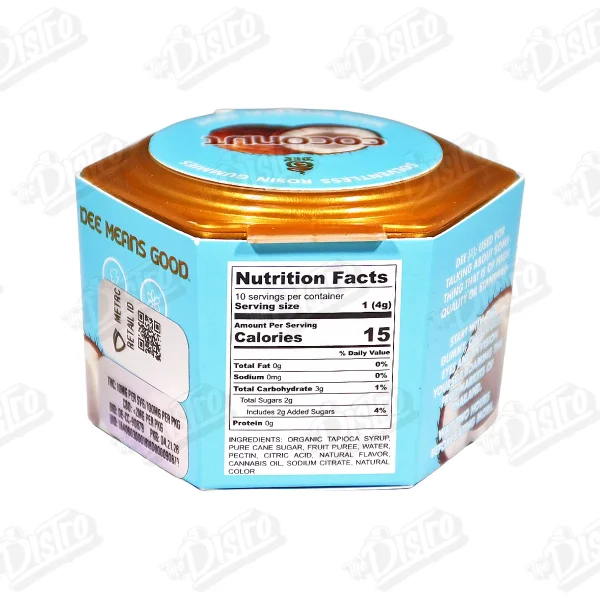
Active Coconut takes the Dee Thai collection in a more distinctly tropical direction.
The official product page identifies it as a Sativa formulation and states that each gummy contains 10mg THC infused with sativa rosin.
The coconut flavor provides a smoother, creamier tropical profile than fruit varieties such as pineapple or guava.
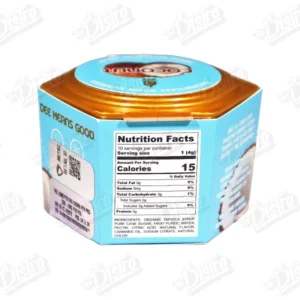
Because coconut can also be a relevant ingredient for people with specific dietary concerns, consumers should always consult the complete ingredient and allergen declaration rather than assuming the flavor name explains the formulation.
The current 10-piece format corresponds to a standard total of 100mg THC per package. Current Weedmaps listings also identify Active Coconut as a 100mg THC ten-pack.
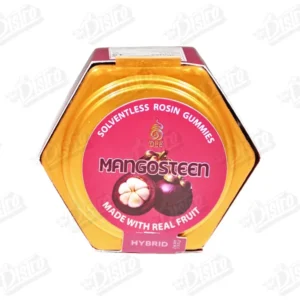
Reset Mangosteen Hybrid Gummies
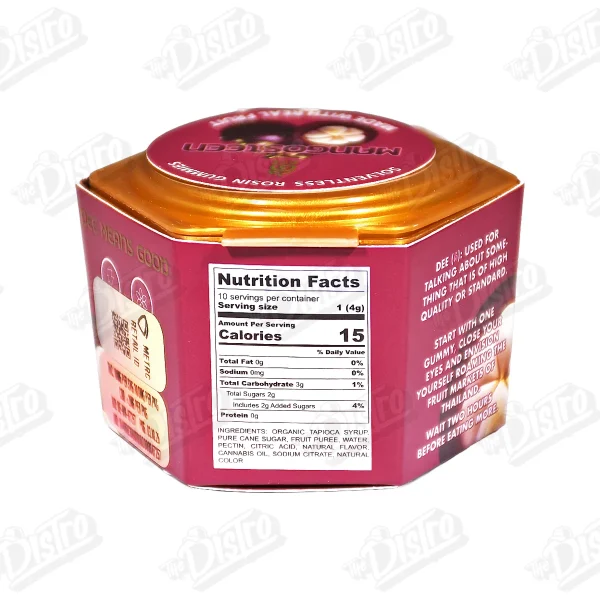
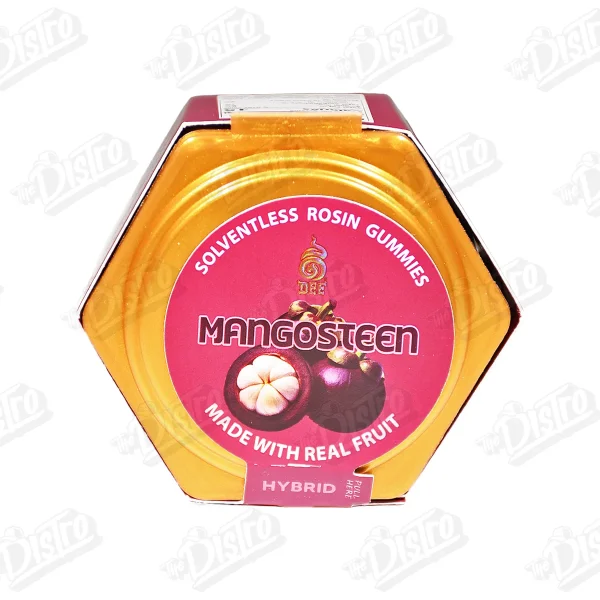
Reset Mangosteen is one of the most distinctive flavor choices in the Dee Thai collection.
Mangosteen is a tropical fruit associated with Southeast Asia and is known for a sweet-tart flavor profile. Dee Thai’s official product page describes its version as a Hybrid rosin gummy containing 10mg THC per piece.
The use of mangosteen helps distinguish Dee Thai from cannabis edible lines built around familiar American candy flavors.
Its current ten-piece format corresponds to 100mg THC across the package. Weedmaps also lists the Reset Mangosteen product as a 100mg THC ten-pack.
For consumers researching Dee Mangosteen Gummies, the main product characteristics are therefore the tropical fruit flavor, hybrid-roson formulation, and standard 10mg-per-piece THC format.
Energy Pineapple 2:1 THC Gummies
Energy Pineapple differs from the basic THC-only formulations because it adds THCV.
Dee Thai’s official product page identifies a 2:1 THC ratio, with each gummy containing 10mg THC and 5mg THCV.
Across ten gummies, this corresponds to approximately:
100mg THC plus 50mg THCV per package.
The flavor profile is juicy pineapple, giving the product another strongly tropical identity.
THCV is a cannabinoid distinct from THC. Consumers should not assume that the presence of THCV guarantees energy, focus, appetite effects, or another specific outcome based solely on marketing descriptions. Cannabinoid research continues to develop, and individual response varies.
For a product guide, the most useful fact is the clearly stated cannabinoid ratio.
Restore Papaya 1:1 THC Gummies
Restore Papaya combines rosin-derived THC with CBD.
The official Dee Thai page lists the formula as a 1:1 THC ratio and states that each gummy contains 10mg THC and 10mg CBD.
That gives the ten-piece package approximately:
100mg THC plus 100mg CBD.
Papaya creates a smooth tropical fruit profile that complements the Thai-inspired flavor focus of the brand.
CBD differs from THC because CBD is not intoxicating in the same way as THC. Nevertheless, a 1:1 product still contains THC and should be handled as an intoxicating cannabis edible.
Consumers comparing Restore Papaya with the standard Mango or Coconut products should pay attention to this cannabinoid distinction rather than comparing only flavor.
Dreamy Dee Lavender Berry 2:1 THC Gummies
Dreamy Dee Lavender Berry is a collaborative formulation combining rosin with CBN.
The official product information states a 2:1 THC ratio, with 10mg THC and 5mg CBN in each gummy.
Across ten gummies, the package therefore contains approximately:
100mg THC plus 50mg CBN.
The flavor combines lavender and berry notes, making it substantially different from the pure tropical-fruit profiles elsewhere in the range.
Dee markets the product around nighttime use and rest-oriented positioning. Those statements should be understood as brand positioning rather than guaranteed medical outcomes. A product page should avoid claiming that CBN treats insomnia or guarantees sleep.
The objective characteristics are the cannabinoid ratio, rosin infusion, 10-piece format, and lavender-berry flavor.
Refresh Guava 1:1 THC Gummies
Refresh Guava pairs THC with CBG.
The official Dee Thai page identifies a 1:1 THC ratio, with each piece containing 10mg THC and 10mg CBG.
A complete ten-piece package therefore provides approximately:
100mg THC plus 100mg CBG.
Guava brings another tropical fruit profile to the range, combining sweetness with the brighter aromatic character typically associated with the fruit.
CBG is a separate cannabinoid from both THC and CBD. Marketing descriptions sometimes associate CBG formulations with focus or clarity, but these effects should not be presented as guaranteed clinical outcomes.
For consumers comparing Dee gummies, Refresh Guava stands out primarily because of its equal THC-to-CBG ratio.
Dee Rosin Gummies vs Distillate Gummies
One of the most common comparisons is solventless rosin gummies versus distillate gummies.
| Feature | Dee Solventless Rosin Gummies | Typical Distillate Gummies |
|---|---|---|
| Main cannabis extract | Live rosin | Refined cannabinoid distillate |
| Extraction approach | Brand describes water, heat, and pressure | Usually involves extraction and substantial refinement |
| Plant compounds | Broader plant profile may remain | Often more cannabinoid-focused |
| Cannabis flavor | Can retain more plant character | Generally more neutral |
| Gummy flavors | Tropical fruit focused | Wide range of candy/fruit flavors |
| Potency | Typically 10mg THC per piece | Depends on product and market |
| Quality determination | Depends on testing and manufacturing | Depends on testing and manufacturing |
Dee Thai describes its solventless hash as produced with only water, heat, and pressure and calls the resulting formulation full spectrum.
That does not mean a rosin gummy is automatically stronger than a distillate gummy.
A 10mg THC rosin gummy and a 10mg THC distillate gummy both contain approximately the labeled quantity of THC when accurately manufactured and tested.
The difference lies primarily in the extract and its broader composition.
Dee Gummies vs Live Resin Gummies
Live resin and live rosin sound similar, but the production methods differ.
Live rosin is generally produced mechanically, without hydrocarbon solvents.
Live resin typically begins with fresh-frozen cannabis but uses solvents in a controlled extraction system.
Both approaches may be used to retain a wider range of plant compounds than highly refined distillate, but the terms should not be used interchangeably.
Dee Thai specifically describes its gummies as solventless hash rosin products.
A product page should therefore call them rosin gummies rather than live-resin gummies.
Dee Gummies vs Standard THC Gummies
The standard Dee Thai 100mg ten-pack fits the conventional California edible framework more closely than many unusually high-dose products found online.
California’s Department of Cannabis Control limits standard edible cannabis products to 10mg THC per serving and 100mg THC per package.
The familiar 10-piece Dee format—10mg THC per piece and 100mg THC total—matches that standard limit.
Selected Dee products contain additional cannabinoids such as CBD, CBG, CBN, or THCV, but the standard THC component remains 10mg per gummy according to current official descriptions.
How to Verify Dee Solventless Rosin Gummies
Consumers should examine the actual retail package rather than relying entirely on photographs or online menus.
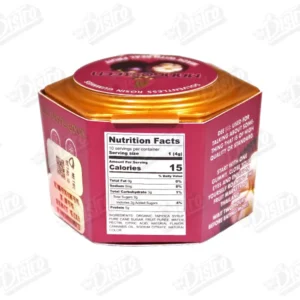
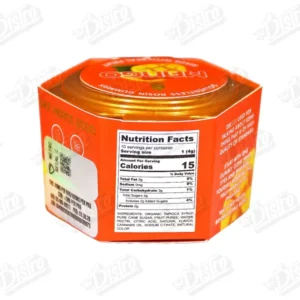
California requires manufactured cannabis product labels to include important information such as the product identity, net weight, cannabis symbol, UID tracking number, batch or lot number, ingredients, allergens where applicable, and THC/CBD content per package and per serving for edibles.
For Dee Thai Gummies, compare the package against the following details:
Check that the brand is identified consistently as Dee or Dee Thai.
Confirm the flavor—for example Mango, Coconut, Mangosteen, Pineapple, Papaya, Lavender Berry, or Guava.
Check that the THC content corresponds with the product being sold.
For combination products, verify the secondary cannabinoid ratio. Papaya should identify CBD if it is the current Restore formulation; Guava should identify CBG; Lavender Berry should identify CBN; and Pineapple should identify THCV according to Dee Thai’s present lineup.
The batch or lot number should also connect the physical package to testing and distribution records.
What a Certificate of Analysis Should Confirm
A Certificate of Analysis provides laboratory results for a specific batch.
For a Dee gummy product, relevant information can include:
THC concentration: Does the laboratory result support approximately 10mg THC per serving and 100mg per package?
Secondary cannabinoids: Does a 1:1 Guava product actually report CBG? Does the Papaya formulation show CBD? Does Pineapple show THCV?
Batch identity: Does the tested batch correspond to the number on the retail package?
Testing date: Is the report associated with the relevant production period?
Contaminants: Where required, compliance testing can include safety categories beyond cannabinoid potency.
California allows cannabinoid amounts to be labeled based on regulatory compliance testing and requires THC and CBD amounts per package and serving for manufactured edibles.
A generic laboratory report for bulk rosin is not the same as a finished-product COA for a gummy batch.
Ingredients and Dietary Considerations
Dee Thai’s official gummy collection identifies live rosin and pectin as defining ingredients and describes the overall gummy formula as plant-based, vegan, gluten-free, and fat-free.
Pectin is commonly used as a plant-derived gelling agent in vegan gummies.
Consumers with allergies or specific dietary needs should still read the entire ingredient and allergen statement on the package. A vegan claim does not automatically establish that every production environment is free from every allergen.
Likewise, fruit names do not prove that the product contains whole fruit or fruit juice. Flavor systems can include concentrates, natural flavors, acids, sweeteners, or other ingredients.
The physical label should remain the primary source for dietary decisions.
Understanding Edible Onset
Cannabis edibles behave differently from inhaled cannabis because THC passes through digestion and metabolism before its full effects develop.
The CDC states that edible cannabis may take approximately 30 minutes to two hours before intoxicating effects are felt. Effects can also last longer than expected and vary according to the amount consumed, food intake, medications, alcohol, and other factors.
That delayed onset makes the serving information on a ten-piece 100mg package particularly important.
The absence of immediate effects does not mean an edible is inactive.
Product descriptions should also avoid promising identical experiences for every consumer because cannabis response varies significantly.
Storage Guidance for Dee Rosin Gummies
Dee Solventless Rosin Gummies should generally remain inside their original retail packaging.
Keeping the original package preserves the flavor identification, cannabinoid ratio, potency, ingredients, batch information, warnings, and any testing references.
Unless the specific package directs otherwise, store gummies in a cool, dry, dark environment away from excessive heat and direct sunlight.
High temperatures can soften gummies and cause pieces to stick together, making serving divisions more difficult to identify.
Moisture can also alter texture.
Most importantly, THC-containing gummies should be stored securely away from children and pets.
The CDC recommends keeping cannabis products in a locked childproof container and out of children’s and pets’ reach and sight.
Do not transfer Dee Thai Gummies into ordinary candy bags, fruit-snack containers, bowls, or unmarked jars.
Frequently Asked Questions About Dee Solventless Rosin Gummies
What are Dee Solventless Rosin Gummies?
They are cannabis gummies made by Dee Thai and infused with live rosin. The brand describes its solventless hash as extracted using water, heat, and pressure.
How much THC is in Dee Thai Gummies?
Many current Dee gummy products contain 100mg THC per package, generally divided into ten gummies with 10mg THC each.
How many gummies come in a package?
Current 100mg products are commonly sold as ten-piece packages.
Are Dee Gummies made with solventless rosin?
Yes. Dee Thai’s official site identifies the gummy line as using solventless hash rosin and says the extraction relies on water, heat, and pressure.
Are Dee Thai Gummies vegan?
The brand describes its plant-based pectin gummy formula as vegan. It also describes the line as gluten-free and fat-free.
What flavors are currently available?
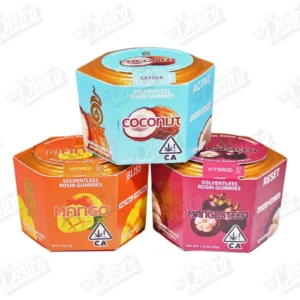
The current official lineup includes Active Coconut, Reset Mangosteen, Energy Pineapple, Bliss Mango, Restore Papaya, Dreamy Dee Lavender Berry, and Refresh Guava.
Does every Dee gummy have the same cannabinoid formula?
No. Mango, Coconut, and Mangosteen emphasize 10mg THC per piece, while selected varieties add other cannabinoids.
What cannabinoids are in Energy Pineapple?
The official formulation uses a 2:1 THC ratio, with 10mg THC and 5mg THCV per gummy.
What cannabinoids are in Restore Papaya?
Restore Papaya uses a 1:1 THC ratio with 10mg THC and 10mg CBD per gummy.
What cannabinoids are in Dreamy Dee Lavender Berry?
The current product uses a 2:1 THC ratio with 10mg THC and 5mg CBN per gummy.
What cannabinoids are in Refresh Guava?
Refresh Guava uses a 1:1 THC ratio with 10mg THC and 10mg CBG per gummy.
Are Dee Rosin Gummies stronger than distillate gummies?
Not automatically. Extract type and cannabinoid quantity are separate characteristics. A properly tested 10mg rosin gummy and a properly tested 10mg distillate gummy both contain approximately 10mg THC.
What is the difference between live rosin and live resin?
Live rosin is produced mechanically without conventional hydrocarbon solvents. Live resin generally uses solvent-based extraction. Dee Thai identifies its gummies specifically as solventless rosin products.
Are Dee 100mg Gummies consistent with California edible limits?
The standard format of 10mg THC per serving and 100mg THC per package corresponds with California’s normal adult-use edible limits.
How can authentic Dee Thai Gummies be checked?
Inspect the retail package for brand information, flavor, THC content, additional cannabinoid ratios, UID information where applicable, batch or lot number, ingredients, warnings, and testing information.
What should a Dee Thai COA show?
It should identify the corresponding batch and show cannabinoid results supporting the package label. Combination products should also show the relevant secondary cannabinoid, such as CBD, CBG, CBN, or THCV.
How long can cannabis gummies take to work?
The CDC says edible cannabis can take approximately 30 minutes to two hours before intoxicating effects are felt.
How should Dee Rosin Gummies be stored?
Keep them sealed in their original package in a cool, dry, dark location and securely away from children and pets.
Final Overview
Dee Solventless Rosin Gummies (100mg) offer a clearly differentiated approach to cannabis edibles through their use of live rosin, pectin-based gummy formulation, tropical Thai-inspired flavors, and several multi-cannabinoid options. Dee Thai states that its solventless hash is produced with water, heat, and pressure and that its cannabis ingredients are processed in-house. The company also describes its gummy formulation as plant-based, vegan, gluten-free, and fat-free.
The current range includes Bliss Mango, Active Coconut, Reset Mangosteen, Energy Pineapple, Restore Papaya, Dreamy Dee Lavender Berry, and Refresh Guava.
For the standard THC products, each gummy generally contains 10mg THC, giving a ten-piece package a total of 100mg THC. Other formulas build on that foundation. Energy Pineapple adds THCV in a 2:1 THC ratio; Restore Papaya combines equal quantities of THC and CBD; Dreamy Dee Lavender Berry pairs THC with CBN; and Refresh Guava combines equal amounts of THC and CBG.
For consumers researching Dee Solventless Rosin Gummies 100mg, Dee Thai Rosin Gummies, Dee Thai flavors, Dee live rosin gummies, Dee Thai Mango Gummies, Dee Thai Papaya Gummies, Dee Thai Guava Gummies, solventless THC gummies, and Dee Thai authenticity, the strongest product information comes from these measurable characteristics rather than exaggerated claims about effects.
The use of solventless rosin differentiates Dee Thai from many distillate-based gummy products, but rosin alone does not automatically establish better quality or greater potency. Reliable evaluation should also consider cannabinoid accuracy, batch consistency, ingredients, laboratory results, packaging, freshness, and regulatory compliance.
Verification is especially straightforward when consumers know what to look for. California requires manufactured cannabis edibles to provide THC and CBD content per package and serving, along with batch or lot information, ingredients, and other required labeling. A Dee Thai product should therefore be evaluated using the complete retail package rather than merely its flavor name or visual appearance.
Storage and responsible handling remain equally important. Gummies should stay in their original packaging, away from excessive heat and moisture, and securely out of reach of children and pets. Edible cannabis also has a delayed onset compared with inhaled products, with the CDC stating that effects can take roughly 30 minutes to two hours to become noticeable.
Overall, Dee Solventless Rosin Gummies stand out through a combination of 100mg THC package formatting, 10mg individual servings, solventless live rosin, tropical fruit flavors, pectin-based formulation, and targeted cannabinoid ratios. A well-informed product assessment should focus on those verifiable characteristics, the exact formulation of each flavor, batch-specific labeling, and appropriate laboratory documentation.