
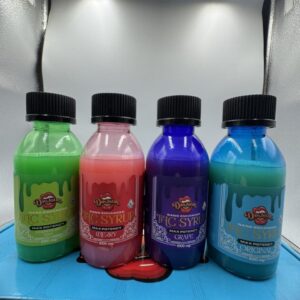
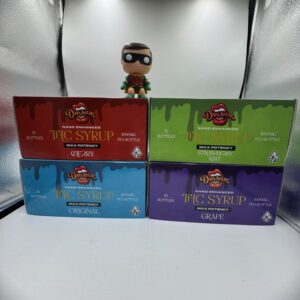
DEVOUR THC Syrup 1000mg: Product Guide
DEVOUR THC Syrup 1000mg is a cannabis-infused liquid product marketed as a high-strength syrup in flavors such as Original, Cherry, Strawberry Kiwi, and Grape. The product is generally described as a nano-enhanced cannabis edible, although the exact formulation, serving size, cannabinoid profile, and legal status should be confirmed from the current package and batch-specific certificate of analysis.
The 1000mg figure refers to the advertised total amount of THC in the bottle, not necessarily the amount in one serving. Product information can vary by batch and jurisdiction, so consumers should evaluate the label, laboratory testing, ingredients, and licensed retail source before treating any online description as definitive.
What Is DEVOUR THC Syrup 1000mg?
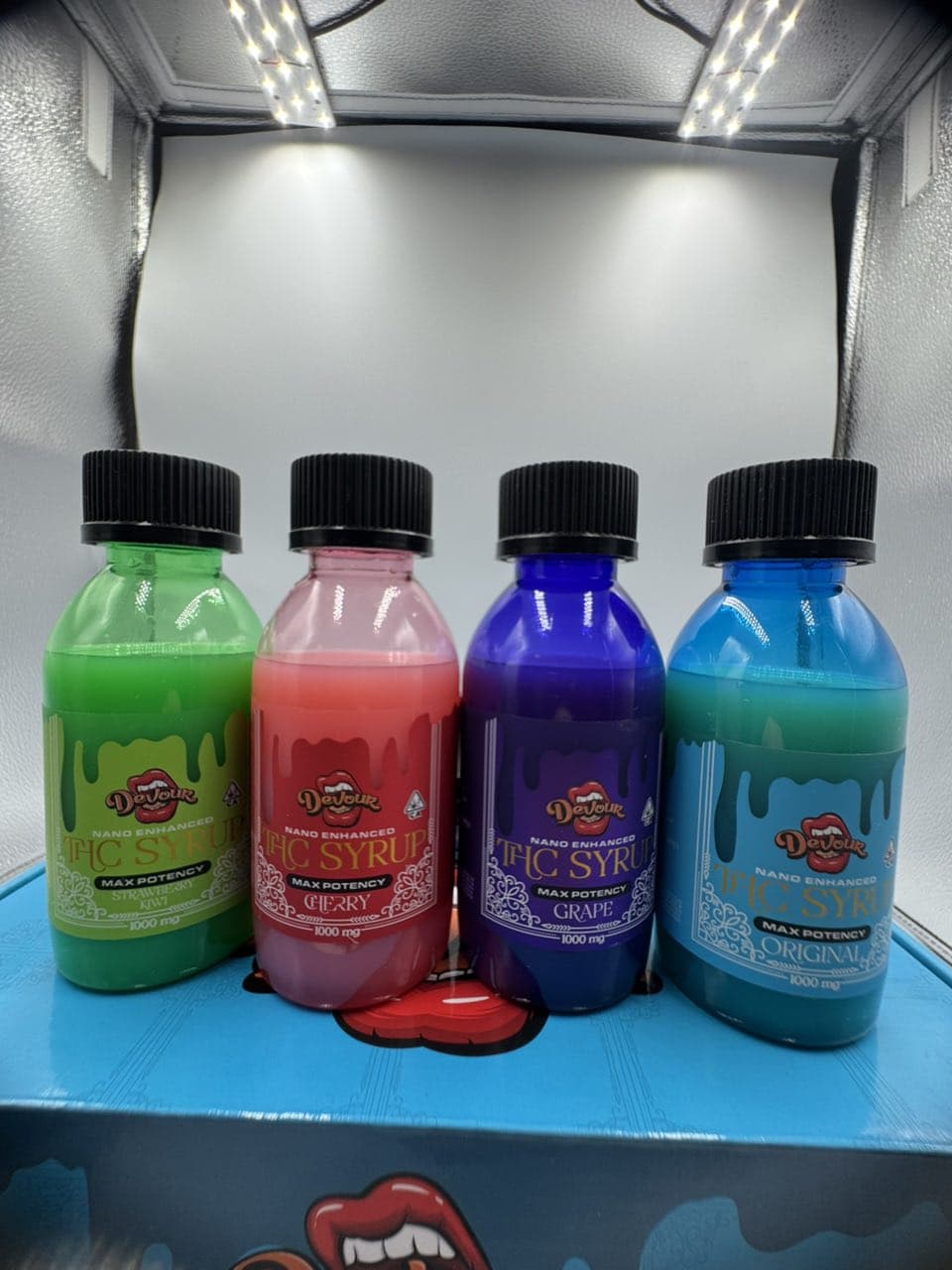
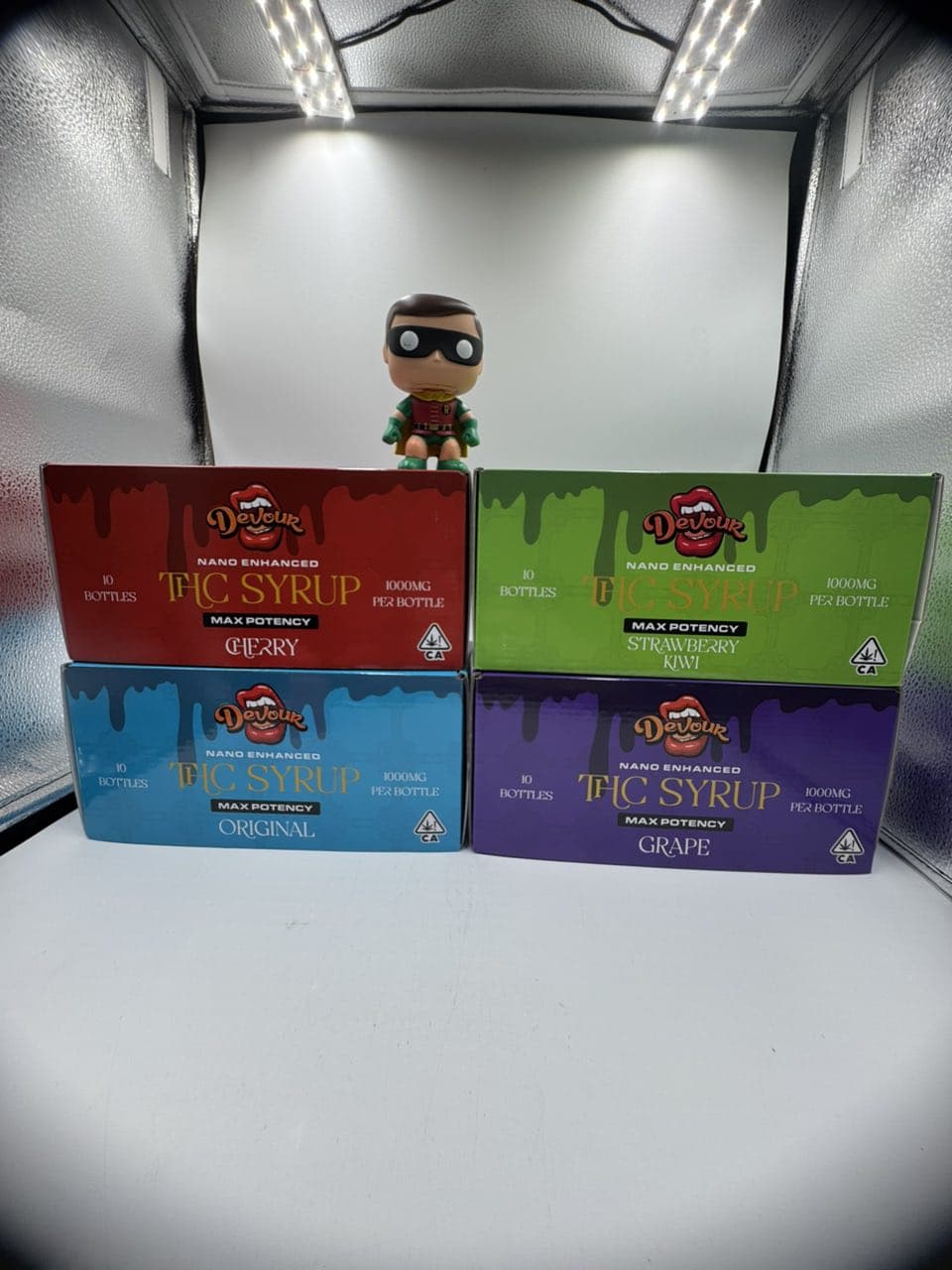
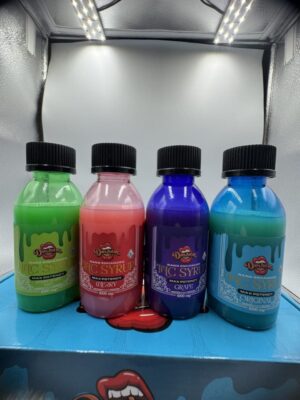
DEVOUR THC Syrup 1000mg is a liquid cannabis edible designed to be consumed as a syrup or incorporated into a beverage, depending on the product label. Retail listings describe versions in several flavors, including Original, Cherry, Strawberry Kiwi, and Grape.calicanna+1
The product is often marketed as “nano enhanced.” In cannabis beverages and liquid edibles, nanoemulsion or nano-enhancement generally refers to a formulation technique intended to disperse cannabis compounds into very small droplets. The goal is to improve how the product mixes into a liquid and may influence the onset profile compared with conventional oil-based edibles. However, consumers should not interpret “nano” as a guarantee of faster onset, greater potency, or a particular experience.
The official Devour website presents the company as a cannabis edible brand and lists a nano-enhanced 1000mg product among its offerings. The current bottle, label, and certificate of analysis remain the most reliable sources for the exact contents of an individual product.
What Does 1000mg Mean?
The 1000mg label usually refers to the total amount of THC advertised in the entire bottle. It does not mean that every teaspoon, capful, or serving contains 1000mg.
For example, one publicly available Devour certificate of analysis identifies a syrup or honey sample with a reported package result of approximately 989.880mg total cannabinoids, including approximately 13.056mg total THC and 976.824mg total CBD for that tested sample. The report identifies a product group covering Original, Cherry, Strawberry Kiwi, and Grape, but it does not provide a conventional batch number in the displayed report and states that its results apply only to the sample tested.
This illustrates why consumers should distinguish between a front-label product claim and a laboratory result for a specific sample. A product advertised as “1000mg” may show a laboratory value slightly below or above that figure because of testing tolerances, formulation differences, and regulatory labeling practices. The COA itself states that it does not make representations for every product within the tested batch.
The label should ideally show:
-
Total THC per bottle.
-
THC per serving.
-
Number of servings.
-
Bottle volume.
-
Ingredients.
-
Batch or lot number.
-
Packaging or manufacturing date.
-
Required warnings.
-
Laboratory or compliance information.
What Is Nano-Enhanced THC Syrup?
Nano-enhanced THC syrup is a liquid edible formulation in which cannabis compounds are dispersed into smaller particles or droplets. Conventional cannabis oils can separate from water-based drinks, whereas a properly formulated nanoemulsion may mix more evenly into certain liquids.
The term describes a formulation approach, not a legal potency category. It does not establish the product’s exact cannabinoid ratio, ingredients, flavoring system, or laboratory performance. Different manufacturers may use different emulsifiers, carriers, processing methods, and terminology.
A nano-enhanced product may be marketed as having a quicker onset than traditional edibles. Those claims should be treated cautiously unless supported by reliable, product-specific evidence. Individual digestion, food intake, metabolism, tolerance, and the product’s formulation all affect how an edible is experienced. No online product page can guarantee a uniform onset time for every consumer.
DEVOUR THC Syrup Flavors
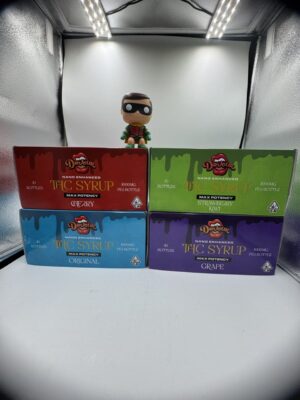
Retail listings commonly identify four DEVOUR THC Syrup 1000mg flavor options:
-
Original.
-
Cherry.
-
Strawberry Kiwi.
-
Grape.
The Original version is generally presented as a more neutral syrup base that can be combined with a beverage or consumed according to the label. Cherry, Strawberry Kiwi, and Grape are flavored variants.
Flavor names are descriptive rather than technical. They do not identify a specific strain, terpene profile, extraction method, or cannabinoid ratio. A cherry flavor, for example, may come from food-grade flavoring rather than cannabis-derived terpenes.
Consumers should review the ingredient panel for sweeteners, flavoring agents, emulsifiers, preservatives, carrier liquids, and any other listed components. Online descriptions may simplify or omit the full ingredient list, while the physical package should provide the legally required information.
Product Format and Serving Information
THC syrup differs from gummies, capsules, tinctures, and beverages because it is a concentrated liquid edible. The bottle may include a measuring cap, syringe, or another dispensing method, but the exact format should be confirmed from the packaging.
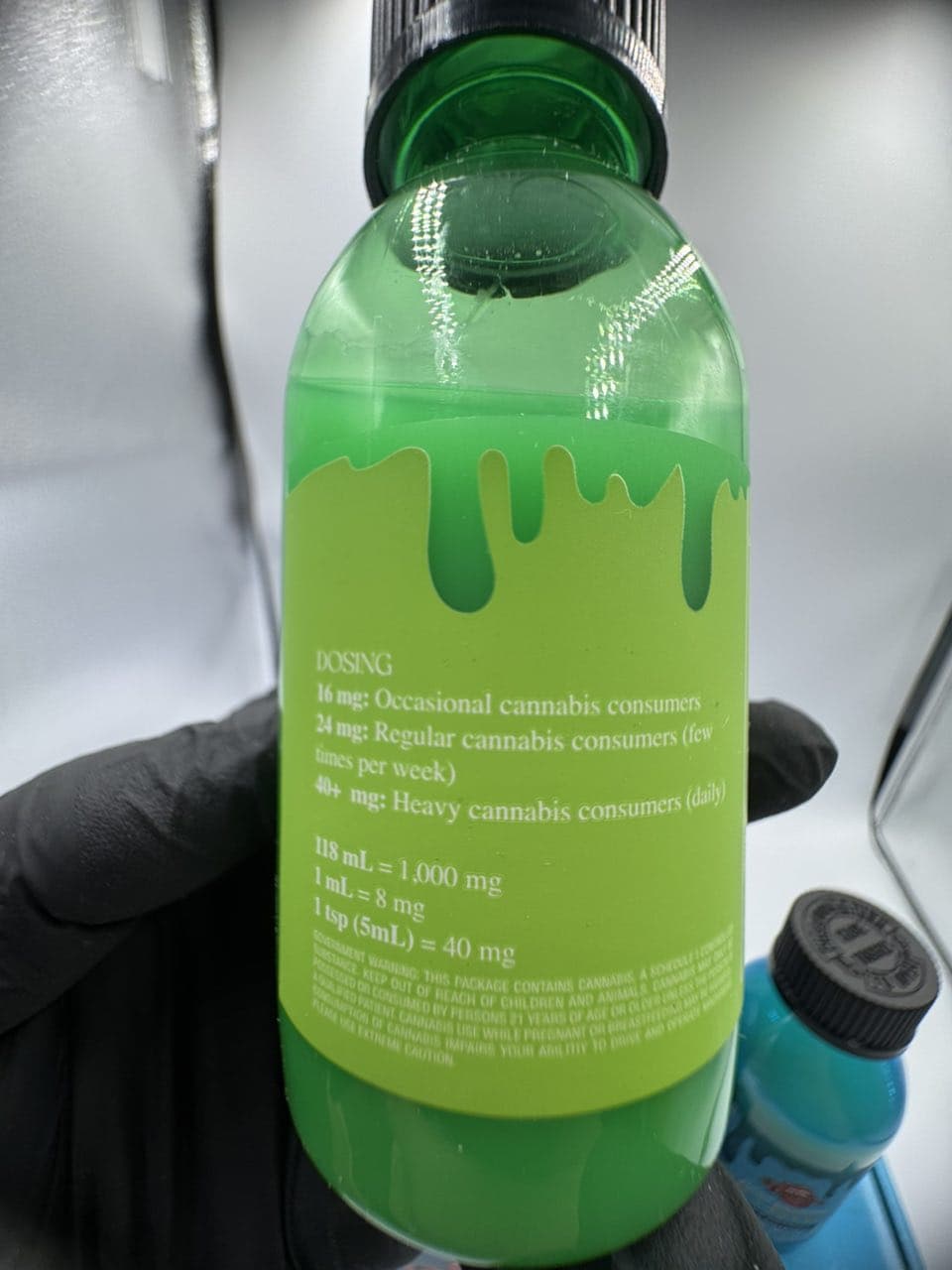
A 1000mg bottle can contain multiple servings. The amount of liquid in the bottle and the stated serving size determine the approximate milligrams per serving. Consumers should not estimate servings by eye or assume that one mouthful equals one labelled dose.
The certificate of analysis referenced above reports approximately 40.701mg of total CBD per serving and 0.544mg of total THC per serving for the tested sample, with approximately 41.245mg of total cannabinoids per serving. These values do not align with a typical “1000mg THC per bottle” interpretation, which demonstrates the importance of checking that the COA belongs to the same formulation, market, and package being reviewed.
A certificate can be genuine yet still fail to verify a specific retail product if the batch number, product identity, or jurisdiction does not match. Product pages should not combine one listing’s potency claim with another sample’s laboratory report.
DEVOUR THC Syrup Ingredients
Public retailer descriptions identify THC and flavor information, but the full ingredients can vary by version. One Devour product listing describes the Original flavor as a neutral base without artificial additives, while other product pages describe flavored variants. Such claims should be confirmed against the bottle’s current ingredient panel.
Possible ingredient categories in a cannabis syrup may include:
-
Cannabis extract.
-
Water or another liquid carrier.
-
Sweeteners.
-
Natural or artificial flavoring.
-
Emulsifying agents.
-
Acidity regulators.
-
Preservatives, where used.
This is a general product-category explanation, not a verified ingredient list for every DEVOUR bottle. Consumers with allergies or dietary restrictions should rely on the exact package and contact the licensed retailer or manufacturer if an ingredient is unclear.
Lab Testing and Certificate of Analysis
Laboratory testing provides important information about cannabinoid content and contaminants. A COA may report THC, THCA, CBD, CBDA, CBG, CBN, delta-8 THC, and other compounds, depending on the test panel.
The publicly available Devour syrup COA identifies the matrix as “Syrup/Honey” and reports cannabinoid testing by HPLC. It also identifies Excelbis Labs LLC as the testing laboratory and states that the certificate applies only to the sample tested.
When evaluating a COA, check whether:
-
The product name matches the bottle.
-
The flavor or formulation matches.
-
The batch number matches the package.
-
The testing date is reasonable.
-
The reported THC value matches the label.
-
The laboratory is authorized in the relevant jurisdiction.
-
Required contaminant panels are included.
-
The document has not been cropped or altered.
A COA that reports mostly CBD rather than THC may belong to a different product, an incorrectly identified sample, or a formulation that does not match the online listing. This is precisely why batch-level matching matters.
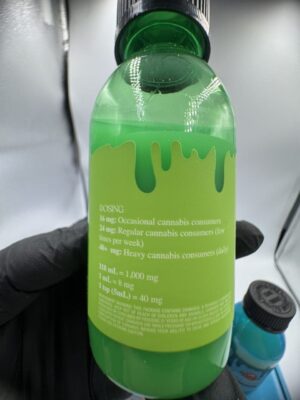
Packaging and Authenticity
A genuine regulated cannabis syrup should be sold in compliant packaging with clear product information. The bottle and outer package should be sealed, legible, and consistent with the laws of the state where it is sold.
Important packaging details may include:
-
Brand and product name.
-
Flavor.
-
Total bottle volume.
-
Total THC and THC per serving.
-
Ingredients.
-
Batch or lot number.
-
Packaging date.
-
Manufacturer or distributor information.
-
Required cannabis warnings.
-
Child-resistant features where required.
-
Laboratory or traceability information.
A QR code can help connect a consumer to a COA or verification page, but scanning a code alone does not prove authenticity. The linked record should match the product’s flavor, batch number, package size, and cannabinoid profile.
Consumers should purchase cannabis products only from licensed dispensaries or regulated retailers where permitted by law. Informal sellers may use copied packaging, inaccurate potency claims, or laboratory documents that do not correspond to the product being sold.
Responsible Product Information
A 1000mg THC syrup is a concentrated edible product. Content about it should remain factual and should not present the product as a medical treatment, wellness solution, or guaranteed experience.
Cannabis edibles can be difficult to evaluate from appearance alone. A bottle may look similar to a non-cannabis beverage syrup, so responsible storage and clear labelling are important. Cannabis products should be kept in their original packaging and secured away from children, pets, and anyone who should not access them.
Consumers should follow the label and local regulations. They should not drive or operate machinery while impaired. People who are pregnant, under the legal age, taking medications, or concerned about cannabis interactions should seek advice from an appropriately qualified professional.
The CDC and FDA have also advised against THC products obtained from informal sources, particularly in connection with the EVALI outbreak involving unregulated vaping products. Although syrup is an edible rather than a vape, the broader lesson remains relevant: traceable, regulated sourcing is more reliable than an unverified online listing.archive.cdc+1
DEVOUR THC Syrup 1000mg FAQs
Is the DEVOUR THC Syrup actually 1000mg?
The product is marketed as 1000mg, but the exact laboratory result can vary by batch. A publicly available COA reports approximately 989.880mg total cannabinoids for one tested sample and states that results apply only to the sample tested. Check the current package and matching COA.
Does 1000mg mean 1000mg per serving?
No. The 1000mg figure generally refers to the full bottle. The serving amount should be printed separately on the package.
Is DEVOUR THC Syrup a tincture?
Not necessarily. A syrup is a liquid edible formulation, while a tincture is usually an extract prepared in a liquid carrier and labelled for a particular administration method. The product category and directions on the bottle should determine how it is classified.
What flavors are available?
Retail listings commonly mention Original, Cherry, Strawberry Kiwi, and Grape. Availability can vary by retailer and market.calicanna+1
What does nano enhanced mean?
It generally refers to a formulation that disperses cannabis compounds into very small particles or droplets. The term does not guarantee a specific onset time, strength, or experience.
How do I verify a bottle?
Buy from a licensed retailer, inspect the seal and label, check the batch number, and compare the product with a matching laboratory report. A generic QR code or product photograph is not enough.
Can the syrup be mixed with drinks?
Some product listings describe the syrup as suitable for mixing, but consumers should follow the official package directions. The label should also identify whether the product is intended to be consumed directly, mixed into a beverage, or used in another manner.
Why might a COA show a different amount from the label?
Differences may result from batch variation, laboratory tolerances, rounding, testing of a different product, or an online listing error. A report that does not match the product’s batch number should not be treated as verification.
Does the flavor identify a cannabis strain?
No. Flavor names such as Cherry or Grape describe the product’s sensory presentation. They do not necessarily identify a cultivar or terpene profile.
Conclusion
DEVOUR THC Syrup 1000mg is marketed as a concentrated liquid cannabis edible available in several flavor options and, in some listings, as a nano-enhanced formula. The 1000mg figure generally refers to the advertised amount for the entire bottle, while serving-level cannabinoid content must be confirmed from the current product label and laboratory documentation.
The available Devour COA shows why consumers should take a batch-specific approach: one tested syrup sample reported cannabinoid results that did not simply correspond to a universal 1000mg THC assumption, and the document explicitly limited its findings to the sample tested. For accurate product information, check the packaging, ingredients, batch number, serving details, licensed retailer, and matching certificate of analysis. Where cannabis products are legal, regulated purchasing channels provide the strongest basis for authenticity and responsible evaluation.


Reviews
There are no reviews yet.