
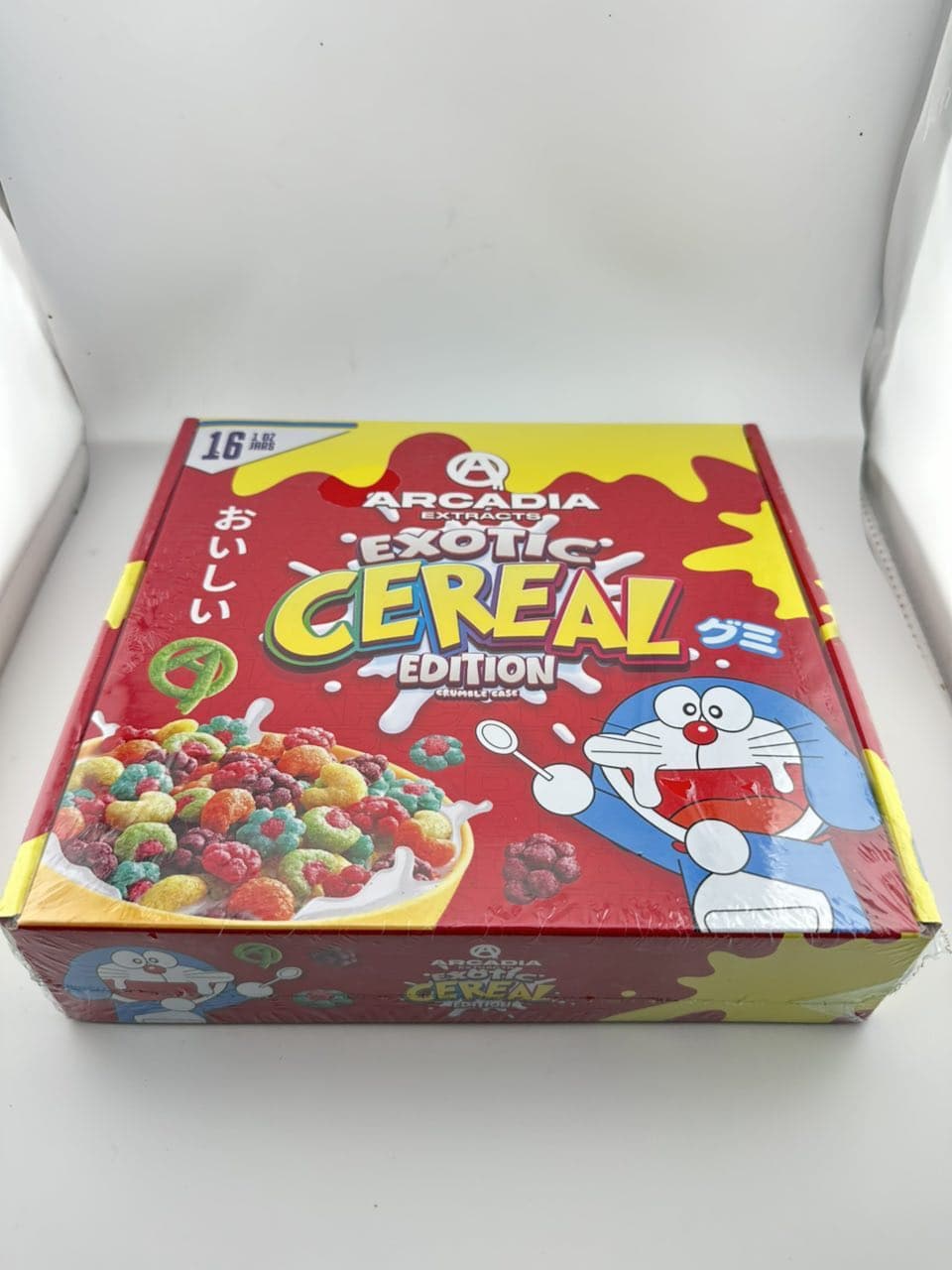
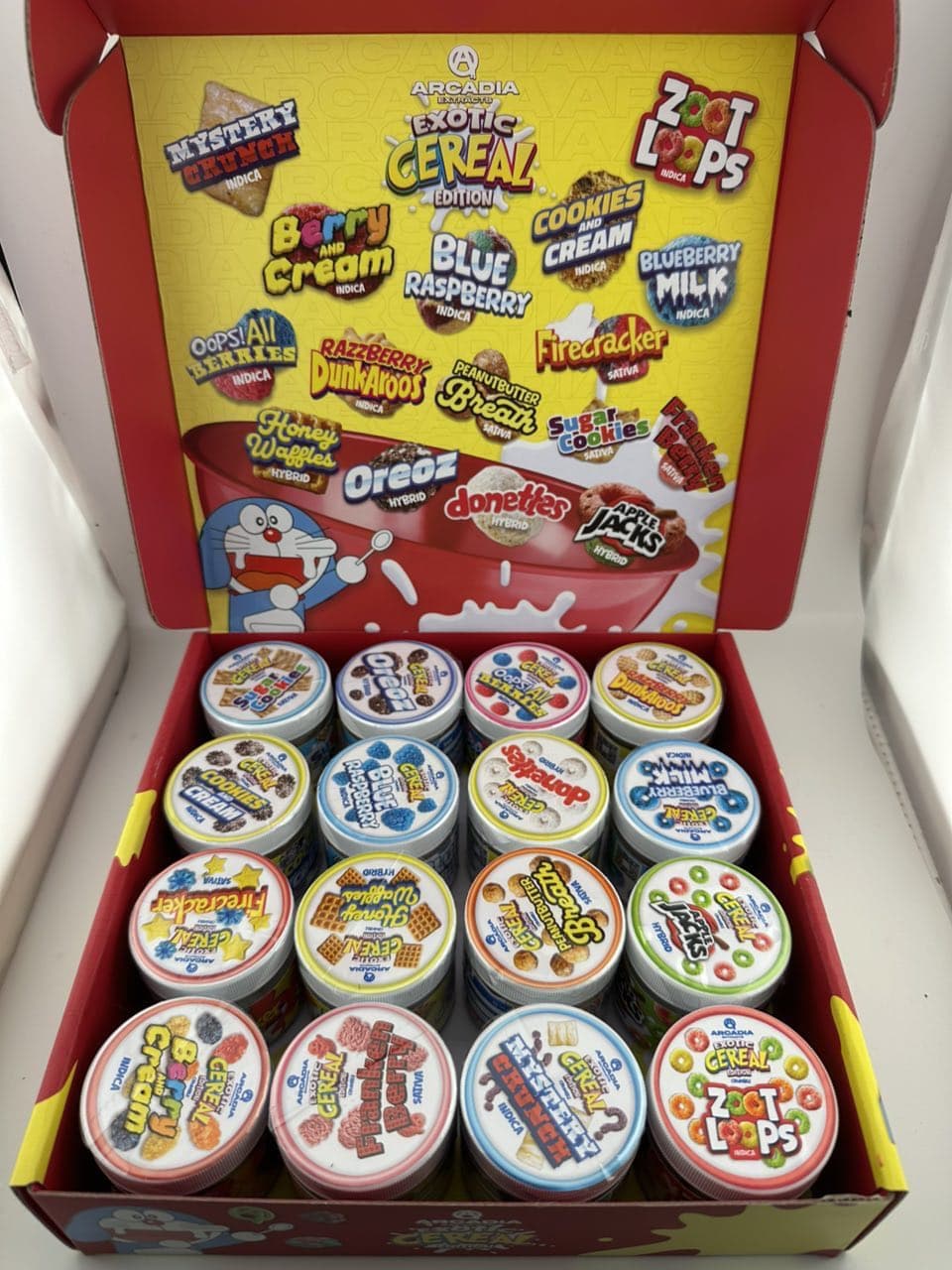
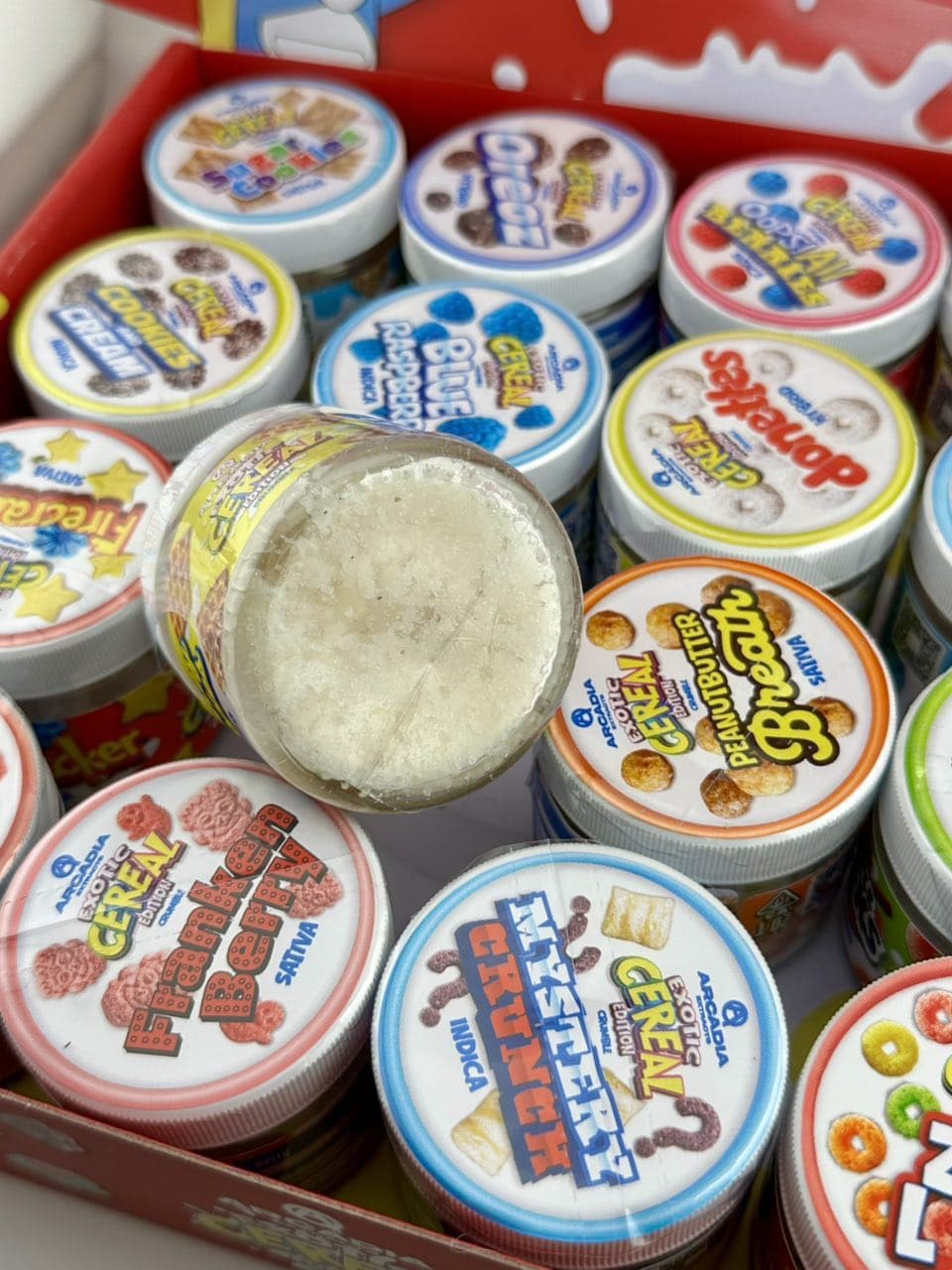
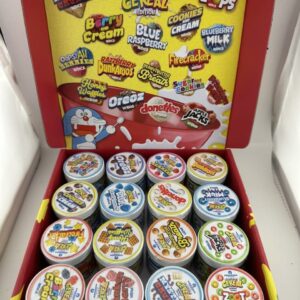
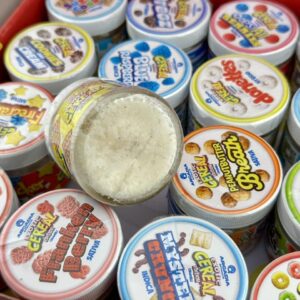
Arcadia Extracts Crumble Exotic Cereal Edition
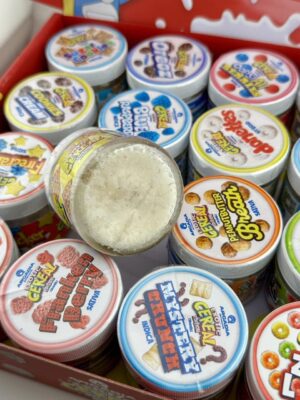
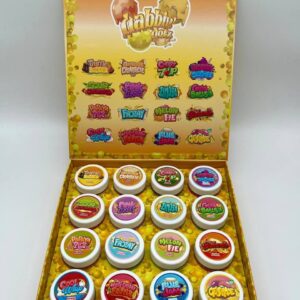
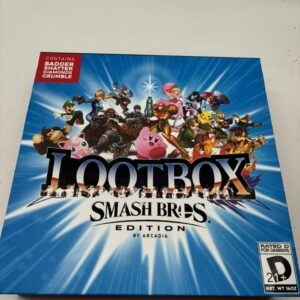
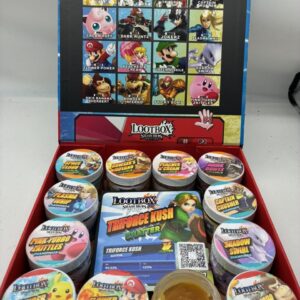
Arcadia Extracts Crumble Exotic Cereal Edition is a product name associated with the cannabis concentrate category, where “crumble” generally refers to a dry, crumbly concentrate texture. Online descriptions can provide useful clues about how a product is presented, but they should not automatically be treated as independently verified specifications. Available online Arcadia-related listings describe crumble as a dry or brittle concentrate format and use flavor-oriented edition names, but the available sources do not provide sufficient independent documentation to verify every detail associated specifically with an “Exotic Cereal Edition.” (Arcadia Extract)
That distinction is important when researching cannabis concentrates. Product names can combine a manufacturer or brand name, an edition name, and a concentrate format without explaining the complete cannabinoid profile, terpene composition, extraction method, testing history, or regulatory status. For that reason, a useful Arcadia Extracts Crumble Exotic Cereal Edition review should focus not only on the product description but also on what “crumble” means, how concentrate terminology is used, what laboratory documentation can establish, and which details should be verified before relying on an online listing.
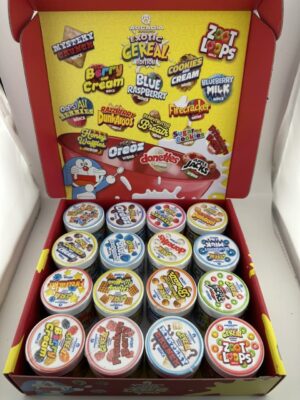
What Is Arcadia Extracts Crumble Exotic Cereal Edition?
Arcadia Extracts Crumble Exotic Cereal Edition appears to describe a cannabis concentrate presented in a crumble-style format with “Exotic Cereal” used as an edition or flavor-oriented name. However, the available online material does not provide enough independently verifiable information to establish a definitive formulation, batch-specific cannabinoid concentration, exact terpene profile, or extraction process for this particular edition.
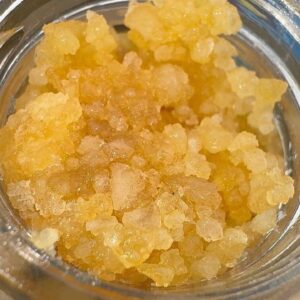
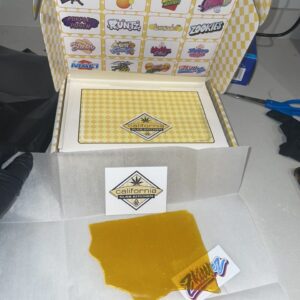
The word “crumble” is more informative than the edition name because it describes a recognized concentrate texture. Cannabis crumble is generally characterized by a relatively dry, soft-to-brittle consistency that can break apart more easily than wetter concentrate formats. Online Arcadia listings similarly describe their crumble products as dry or crumbly. (Arcadia Extract)
The term “Exotic Cereal”, by contrast, should be interpreted cautiously. It may function as a branding, flavor, aroma, strain-inspired, or product-line designation, but a name alone does not establish a scientifically measured terpene composition. A product marketed with a cereal-inspired name does not necessarily contain the same aromatic compounds as a particular food or beverage, and readers should avoid treating a creative product name as a laboratory result.
For an authoritative product page or review, the strongest approach is therefore to separate established concentrate terminology from product-specific claims. Manufacturer packaging, batch information, a certificate of analysis, and applicable regulatory labeling are more useful for establishing factual product characteristics than an isolated retailer description.
Understanding Cannabis Crumble Concentrate
What Does Crumble Mean in Cannabis Concentrates?
Cannabis crumble is a concentrate format recognized primarily by its physical consistency. Compared with wetter concentrates, crumble typically has a lighter, drier, more fragile structure. The concentrate may break apart rather than stretch or behave like a soft paste.
Texture is not simply a cosmetic characteristic. Concentrate consistency can reflect differences in processing, purification, moisture, temperature, terpene content, storage conditions, and formulation. Two products both described as “crumble” may therefore look or behave somewhat differently.
This is one reason terminology should be understood as a category description rather than a guarantee of identical manufacturing characteristics. “Crumble” can communicate the general physical format while leaving many questions unanswered about cannabinoids, terpenes, extraction, and testing.
Crumble Versus Wax
Crumble and wax are closely related terms within cannabis concentrate terminology, but they generally refer to different physical characteristics. Wax commonly describes a softer, more malleable concentrate, while crumble is generally associated with a drier structure that breaks apart more readily.
The boundary between these terms is not always rigid. Concentrate terminology varies between producers, retailers, and markets. A product’s actual texture can also change over time because of environmental conditions. Consequently, a label saying “crumble” should be considered alongside the physical description and manufacturer information rather than interpreted as a universal technical specification.
Crumble Versus Badder or Budder
Badder and budder generally describe concentrates with a creamy, whipped, or buttery consistency. Crumble, in contrast, tends to have a more friable structure. These differences can affect how the material looks and handles, but they do not independently establish potency or purity.
The distinction is particularly useful for searchers who encounter several concentrate categories on the same website. A texture name helps identify the product format, while laboratory testing is needed to understand cannabinoid content and contaminant screening.
Crumble Versus Shatter
Shatter is commonly associated with a smooth, glass-like or translucent appearance and a more rigid structure. Crumble is generally less glass-like and more fragile. The two formats can therefore look dramatically different even when they originate from similar broad categories of cannabis extracts.
Neither appearance should be treated as proof of quality. Color, clarity, texture, and consistency can provide descriptive information, but they cannot replace laboratory analysis.
Crumble Versus Live Resin and Live Rosin
Live resin and live rosin are terms that describe particular concentrate categories and processing concepts rather than merely textures. Live resin is generally associated with solvent-based extraction concepts involving fresh or fresh-frozen cannabis material, while live rosin belongs to the solventless concentrate category.
These terms should not be automatically applied to Arcadia Extracts Crumble Exotic Cereal Edition unless manufacturer documentation confirms them. A product being described as “premium,” “terpene-rich,” or “exotic” does not establish that it is live resin or live rosin.
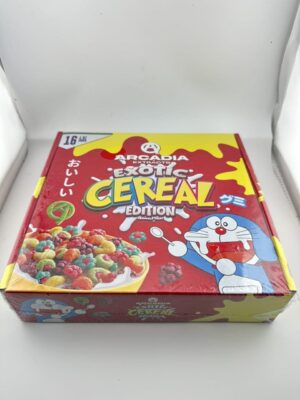
Arcadia Extracts Crumble Exotic Cereal Edition Flavor and Terpene Profile
The Exotic Cereal designation appears to be intended as a flavor-oriented or product-identification concept, but the available information does not provide sufficient batch-specific laboratory evidence to establish an exact terpene profile for this edition.
Terpenes are naturally occurring aromatic compounds found in cannabis and numerous other plants. They contribute to aroma and flavor and can vary significantly between cultivars, growing conditions, processing methods, storage conditions, and individual batches.
This makes terpene terminology particularly important when reviewing cannabis concentrates. A product name can suggest an expected sensory theme, but it cannot prove the presence or concentration of a particular terpene.
For example, a cereal-inspired name might lead a reader to expect sweet, creamy, fruity, or bakery-associated aromatic characteristics. That expectation is different from a laboratory-confirmed terpene profile. A credible product review should make that distinction clear rather than presenting an inferred flavor description as a scientific fact.
Online Arcadia listings for other crumble editions use descriptive language involving sweet, citrus, earthy, herbal, or candy-inspired characteristics. Those descriptions demonstrate how the brand name and edition terminology are used online, but they should not automatically be transferred to the Exotic Cereal Edition. (Arcadia Extract)
For publication-quality information, the most reliable approach is to identify the terpene information printed on the specific package or reported on the corresponding certificate of analysis.
Cannabinoid Content and Potency Information
Cannabinoid content is one of the most important areas to verify when researching a cannabis concentrate. Cannabinoids can include THC, THCA, CBD, CBG, and other naturally occurring compounds, depending on the product and its formulation.
A product listing may advertise a particular potency, but an online description is not necessarily equivalent to batch-specific laboratory testing. Concentrate potency can vary from one production batch to another, making the batch number particularly important when evaluating laboratory documentation.
THC and THCA should also be distinguished. THCA is the acidic cannabinoid naturally present in raw cannabis material, while THC refers to the intoxicating cannabinoid associated with cannabis after decarboxylation. Product labels and laboratory reports can present cannabinoid values in different ways, so readers should examine the actual testing document rather than relying on a simplified percentage shown in an online listing.
The same principle applies to CBD and minor cannabinoids. Their presence, absence, or concentration should be established through product-specific laboratory documentation rather than inferred from the product’s name.
A certificate of analysis, commonly called a COA, can provide substantially more useful information than a retailer description because it is intended to document analytical results for a particular sample or batch. A trustworthy review should therefore avoid inventing a THC percentage, CBD percentage, terpene concentration, or cannabinoid ratio when the appropriate documentation is unavailable.
How Cannabis Concentrate Extraction Works
Cannabis extraction is the broader process through which cannabinoids and other compounds are separated from cannabis plant material and concentrated into a different product format. Different extraction approaches can produce different textures, chemical profiles, and sensory characteristics.
At a high level, extraction methods can be divided into solvent-based and solventless categories. Solvent-based approaches use an extraction medium to separate desired compounds from plant material, followed by additional processing appropriate to the product. Solventless approaches use mechanical or physical separation concepts rather than conventional chemical solvents.
The distinction matters because consumers sometimes assume that every concentrate described as crumble has been produced using the same process. That is not necessarily true.
Processing can influence the final appearance, consistency, cannabinoid distribution, terpene preservation, and stability of a concentrate. Refinement and filtration can also influence the final characteristics. However, these relationships are complex, and appearance alone cannot reveal the exact process used.
For that reason, an Arcadia Extracts Crumble Exotic Cereal Edition review should not state a specific extraction technique unless the manufacturer provides reliable documentation supporting the claim.
Product Quality and Laboratory Testing
Laboratory testing is one of the strongest tools available for evaluating cannabis product information.
A comprehensive certificate of analysis may include cannabinoid testing, terpene information, microbial screening, pesticide analysis, heavy-metal screening, and residual-solvent testing where applicable. The exact requirements vary according to jurisdiction and product category.
For a product such as Arcadia Extracts Crumble Exotic Cereal Edition, a reviewer should ideally be able to connect the COA to the exact product and batch. A generic laboratory report that does not identify the relevant batch is less useful for establishing the characteristics of a particular package.
Important details can include the product name, batch or lot number, testing laboratory, testing date, cannabinoid results, applicable contaminant results, and other regulatory information required in the relevant market.
The available Arcadia-related online listings make testing and potency claims for some products, but those claims should not be generalized to every Arcadia Extracts product or every batch. (Arcadia Extracts)
This is particularly important for online research because websites can contain outdated descriptions, copied specifications, inconsistent branding, or product pages that remain indexed after inventory or formulations change.
A reliable editorial article should therefore distinguish between “the listing states” and “the laboratory documentation confirms.”
Arcadia Extracts Crumble Exotic Cereal Edition Authenticity
Authenticity is another important consideration when researching branded cannabis concentrates.
Popular product names can appear across multiple online stores, social-media posts, marketplaces, and third-party websites. The presence of a familiar logo or product photograph does not by itself establish that a particular package is genuine.
The first step in evaluating authenticity is consistency. The product name, manufacturer information, batch number, packaging information, regulatory labeling, and laboratory documentation should make sense together.
A legitimate package in a regulated market should generally contain information appropriate to that jurisdiction. Depending on location and product category, this can include cannabinoid information, warning statements, manufacturing information, batch identification, and other required labeling.
A COA should ideally correspond to the product’s batch number. If a website displays a laboratory report that does not match the package being discussed, the report should not automatically be treated as evidence for that specific product.
Photographs also have limitations. An image can demonstrate what a product is claimed to look like, but it cannot establish the contents of the container, laboratory results, manufacturing history, or authenticity.
The safest editorial position is therefore to treat authenticity as something that requires documentation rather than something that can be determined solely from packaging aesthetics.
Comparing Crumble With Other Cannabis Concentrates
Cannabis concentrates use a large vocabulary that can be confusing to newcomers. Crumble generally emphasizes a dry, friable texture. Wax commonly describes a softer wax-like consistency. Badder or budder usually refers to a creamier consistency. Shatter is generally associated with a rigid, glass-like structure.
Live resin and live rosin describe different processing categories rather than simply textures. Live resin is generally associated with solvent-based extraction concepts involving fresh or fresh-frozen cannabis material, while live rosin is a solventless category.
Other concentrate terms can include sauce, diamonds, hash, rosin, resin, distillate, and various regional or brand-specific descriptions. Importantly, these categories are not always standardized across every producer or market.
This means a consumer researching Arcadia Extracts Crumble Exotic Cereal Edition should not assume that one concentrate category is inherently superior to another. Each format can have different physical characteristics and different production concepts.
The most useful comparison is therefore based on what the reader is actually trying to understand: texture, processing terminology, cannabinoid information, terpene documentation, laboratory testing, packaging, and regulatory compliance.
Storage and Product Quality Considerations
Cannabis concentrates can be sensitive to environmental conditions. Heat, light, oxygen, and moisture can influence the physical and chemical characteristics of many concentrate products over time.
Changes in temperature can affect texture and consistency, while prolonged exposure to unsuitable environmental conditions can affect aroma and overall product stability. The precise effect depends on the formulation, packaging, and storage environment.
For that reason, product quality should not be evaluated solely by comparing a newly opened sample with a photograph found online. A concentrate can change in appearance without that change automatically proving that it is counterfeit, just as an attractive appearance does not prove purity.
Readers should follow the manufacturer’s storage information and any applicable legal or regulatory requirements. Packaging should remain appropriately closed and protected from unsuitable environmental exposure according to the product’s labeling.
Who Researches Arcadia Extracts Crumble Exotic Cereal Edition?
Several groups may search for information about Arcadia Extracts Crumble Exotic Cereal Edition.
Experienced concentrate consumers may want to understand the terminology associated with the product and distinguish crumble from other concentrate formats. Cannabis-industry researchers may be interested in brand naming, product categorization, and the way flavor-oriented editions are presented online.
Product reviewers may research the product to determine which claims can actually be supported by documentation. Packaging collectors may also search for edition names to understand how particular product lines are presented.
Another important group consists of people who encounter the product name online and simply want to understand what it means. For those readers, a neutral explanation of crumble, cannabinoid testing, terpene terminology, and authenticity is considerably more useful than repeating promotional language.
That distinction is central to good SEO content. Search engines increasingly reward pages that satisfy the underlying information need rather than pages that repeat a product keyword without adding meaningful context.
Common Questions About Arcadia Extracts Crumble Exotic Cereal Edition
What Is Arcadia Extracts Crumble Exotic Cereal Edition?
It appears to be a product name describing an Arcadia Extracts concentrate in a crumble-style format, with “Exotic Cereal Edition” functioning as an edition or flavor-oriented designation. Specific formulation and laboratory details should be verified from the product’s original documentation.
What Does Crumble Mean in Cannabis Concentrates?
Crumble generally refers to a cannabis concentrate with a relatively dry, fragile, crumbly consistency. The term primarily describes physical texture rather than proving potency, purity, extraction method, or cannabinoid composition.
What Does the Exotic Cereal Name Indicate?
“Exotic Cereal” appears to be an edition or flavor-oriented name. It may communicate a sensory concept, but the name itself does not establish a scientifically verified terpene profile or ingredient list.
How Can Cannabinoid Potency Be Verified?
The strongest source is product-specific laboratory documentation, particularly a certificate of analysis that corresponds to the relevant batch. Online product descriptions should not automatically be treated as equivalent to laboratory results.
What Is a Certificate of Analysis?
A certificate of analysis is a laboratory document reporting analytical results for a tested sample. Depending on the product and jurisdiction, it can contain cannabinoid results and information about contaminants, pesticides, heavy metals, residual solvents, microbes, and other testing categories.
How Can Consumers Identify Questionable Packaging?
Look for inconsistencies between the package, manufacturer information, batch number, regulatory labeling, and available laboratory documentation. Online photographs alone cannot establish authenticity.
How Does Crumble Differ From Wax?
Crumble generally has a drier and more fragile texture, while wax is typically associated with a softer, wax-like consistency. Terminology can vary between manufacturers, so the physical description and product documentation should be considered together.
How Does Crumble Differ From Live Resin?
Crumble primarily describes texture, while live resin describes a concentrate category associated with a particular fresh-material extraction concept. A crumble product should not be described as live resin unless appropriate documentation confirms that classification.
Why Can Concentrate Texture Vary?
Texture can be affected by processing, formulation, terpene content, temperature, storage conditions, and other factors. Even products within the same broad concentrate category may not have identical physical characteristics.
What Should Be Verified Before Relying on an Online Product Description?
Readers should verify the manufacturer, product name, batch number, cannabinoid profile, applicable terpene information, laboratory testing, ingredients or additives where relevant, packaging information, production and expiration information where applicable, and required legal-market labeling.
Key Product Information to Verify
Before publishing or relying on information about Arcadia Extracts Crumble Exotic Cereal Edition, several product-specific details should be confirmed.
The first is the exact product name and manufacturer identification. The second is the batch or lot number, which allows laboratory documentation to be connected to a specific production run.
The cannabinoid profile should be confirmed through the product label or corresponding laboratory report rather than inferred from general Arcadia Extracts descriptions. Terpene information should likewise be treated as product-specific.
Testing information should identify the laboratory and provide results relevant to the actual product or batch. Where applicable, readers should also examine contaminant testing and regulatory labeling.
Ingredients or additives should be verified where the product category makes them relevant. Production dates, expiration or best-by information where applicable, and packaging information can also help establish whether an online description corresponds to a particular product version.
These checks are especially important because online product pages can change over time. A description that appears today may not represent an older or newer batch, and different websites may use substantially different language for products with similar names.
Final Analysis of Arcadia Extracts Crumble Exotic Cereal Edition
Arcadia Extracts Crumble Exotic Cereal Edition is best understood by separating the established meaning of cannabis crumble from the less certain details associated with the specific edition name. Crumble generally identifies a dry or brittle concentrate texture, while “Exotic Cereal” appears to function as an edition or flavor-oriented designation.
Available online Arcadia listings describe several crumble products using texture, flavor, terpene, and potency language, but those descriptions do not provide enough independent evidence to establish every specification of the Exotic Cereal Edition. (Arcadia Extract)
The most important lesson for anyone researching this product is that appearance, branding, and marketing terminology should not be confused with laboratory verification. A product photograph cannot prove cannabinoid content. A flavor name cannot establish a terpene percentage. A retailer description cannot substitute for batch-specific laboratory testing.
A trustworthy Arcadia Extracts Crumble Exotic Cereal Edition review should therefore focus on verifiable information: product identification, concentrate terminology, cannabinoid documentation, terpene information, laboratory testing, packaging, authenticity indicators, and applicable regulations.
Understanding the differences between crumble, wax, badder, shatter, live resin, and live rosin can also make cannabis concentrate terminology easier to navigate. These categories describe different physical or processing characteristics, and terminology may vary between manufacturers and markets.
Ultimately, readers should verify product documentation before relying on specific claims about potency, ingredients, extraction methods, terpene composition, or laboratory results. Where documentation is unavailable, the responsible editorial approach is to say that the information remains unverified rather than filling the gap with assumptions.
For an SEO-focused product information page, that distinction is valuable because it creates content that answers genuine search questions while maintaining accuracy and transparency. Rather than simply repeating promotional descriptions, a well-researched Arcadia Extracts Crumble Exotic Cereal Edition article should help readers understand what the product name means, what crumble represents as a concentrate category, how laboratory testing works, and which product details require independent verification.
The result is a more useful and trustworthy resource for anyone researching cannabis concentrates and attempting to distinguish documented product characteristics from unsupported online claims.





Reviews
There are no reviews yet.